Freehold, NJ · Garage Door Service
Broken or frayed garage door cable in Colts Neck? Freehold Garage Door Pros travels the 6 miles to fix cables on the newer torsion hardware common to this area's 1980s-built homes.
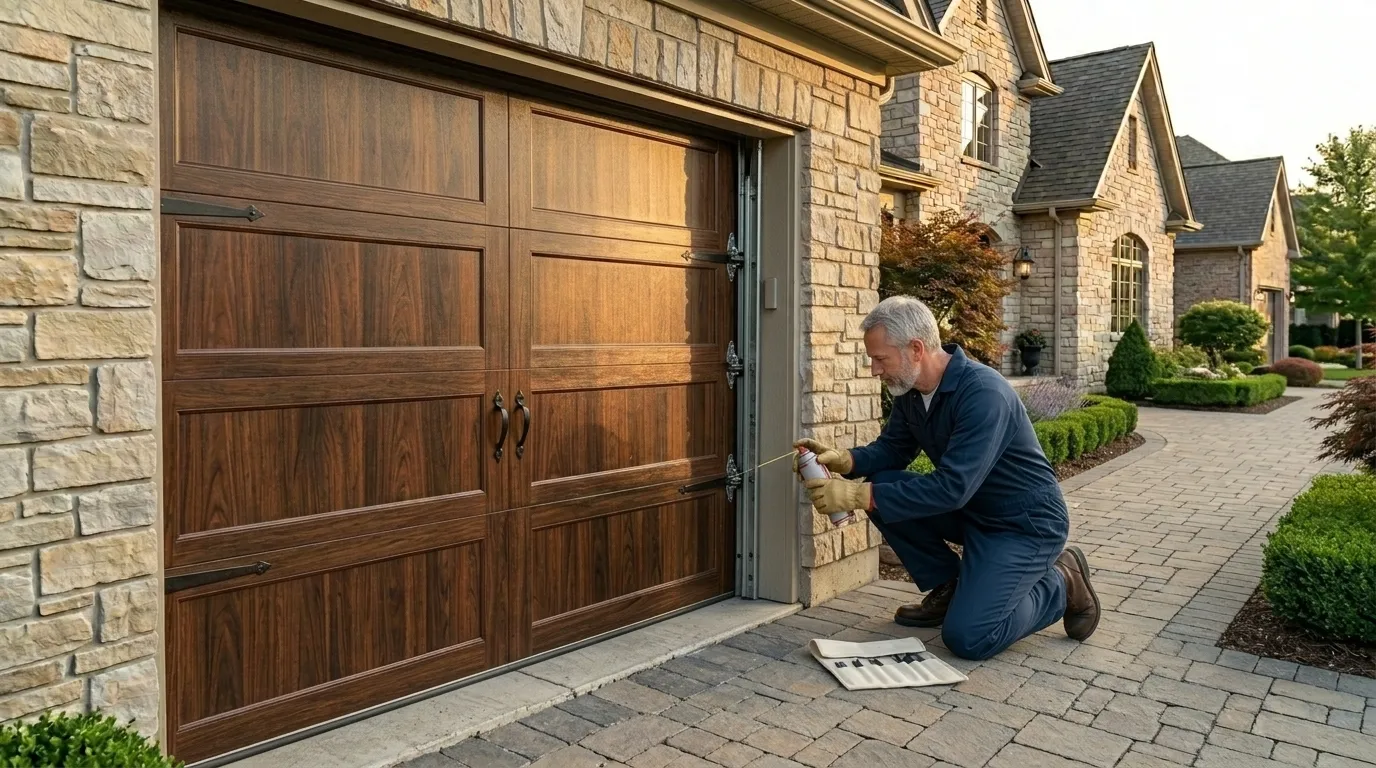
A snapped or frayed lift cable is a same-visit repair for most double and single doors, but the clock depends on what's behind the panel. Colts Neck sits about 6 miles from our shop in Freehold, and the drive out is short enough that cable work here rarely turns into a two-trip job. Where it does take longer is when a cable has been dragging on a drum or a bottom bracket for a while before anyone notices, because by then the track or the roller on that side is usually bent too. On a straight cable swap with no secondary damage, we're in and out. On a door that's been limping along with one side low, plan on more time on the truck for parts we didn't know we needed until the door was open.
The median home in Colts Neck was built around 1980, which puts most garage doors here a generation newer than the 1966-median stock found closer to Freehold's older sections. That matters for cable failure because 1980s-era doors were far more likely to ship with torsion spring systems and steel drums rather than the older extension-spring, side-mounted setups. Torsion-system cables wind onto a drum under real tension, and when one frays or slips off that drum, the door doesn't just stop - it can drop hard on one side. The failure mode here isn't the rusted-out extension cable snapping slowly; it's a torsion cable losing its wind and letting a heavy door corner-fall. Anyone with a door built in that mid-70s-to-90s window should treat a fraying cable as urgent, not as something to watch for another month.
Cables fray at the drum groove, at the bottom bracket where they clip on, or anywhere they rub against a misaligned track. In this area's cold, severe winter climate, steel cable strands can stiffen and the individual wires start to separate at the bend points faster than in a mild climate - that's a straight material fatigue issue, not a manufacturing flaw. A door that drops unevenly, or that one person can lift on one side but not the other, almost always means one cable has already let go and the other side is doing all the work. We also see cables come off the drum entirely on doors where the torsion spring was already weak, because the cable slack lets it jump the groove. That's a two-part fix - cable and spring - not a cable-only job, and pretending otherwise just gets you a callback in a few months.
Tell us the symptom when you call: door dropped and won't move, one side hangs lower than the other, or you can see frayed strands at the drum or bottom bracket. That tells us whether we're bringing a cable-only kit or planning for a spring and drum replacement too. Because we're coming from Freehold, having the door immobilized in a safe position - not forced up or down - before we arrive matters more here than it would for a same-block call. If the door is stuck halfway, leave it; don't try to force it past the stuck cable.
Most people notice a cable problem before it becomes a full failure, if they know what to look for. A door that suddenly runs louder, or that jerks instead of gliding on the way up, is often a cable starting to separate from strain. A visible gap or fray at the drum, a door sitting crooked in its frame at rest, or a bottom corner that looks lower than the other are all signs the cable on that side has partly given out. Once a cable actually breaks, the door won't lift at all, or it'll come down fast and uneven if it was open - do not try to force the opener through that. On the newer torsion setups common in Colts Neck's housing stock, a fully snapped cable usually means the door drops hard on one corner rather than sliding down slowly, which is the version of this failure that can bend a track or crack a panel if it's ignored.
With a median household income of $184,412 in Colts Neck, well above the roughly $123,661 median across our wider service area, the repair-versus-replace math tends to land differently here than in older, lower-value housing stock. On a door that's otherwise in good shape - 1980s-built torsion hardware, tracks straight, opener working - a cable repair is almost always worth doing rather than jumping to full replacement. Where it stops making sense is if the drums are already scored, the spring is undersized for the door's age, or the panel itself is dented from the drop. At that point you're not saving money by patching a cable on a door that needs the rest of it addressed anyway. We don't quote a fixed price without seeing the door, since cable-only jobs and cable-plus-spring jobs aren't the same bill.
If the door was open when the cable broke, don't put anything under it or trust the opener to hold it. A cable failure on a torsion system often means the door will drop suddenly and unevenly. Leave the car parked and call for a same-visit repair rather than forcing the door manually.
Not for long. A fraying cable on the torsion hardware common in Colts Neck homes tends to fail all at once rather than gradually, and a sudden drop can bend track or crack a panel. Once you see visible strand separation at the drum or bracket, treat it as a this-week repair, not a someday one.
Yes, though most Colts Neck homes built around 1980 have torsion-drum setups rather than the older side-mounted extension systems. Tell us what you're seeing on the call and we bring the right hardware from Freehold rather than guessing.
Call now or request a free quote - same-day service on most repairs, upfront written pricing.
