Freehold, NJ · Garage Door Service
Opener installs for Freehold's 1938-2005 housing stock, matched to cold-climate demands and older track and header setups common across the area.
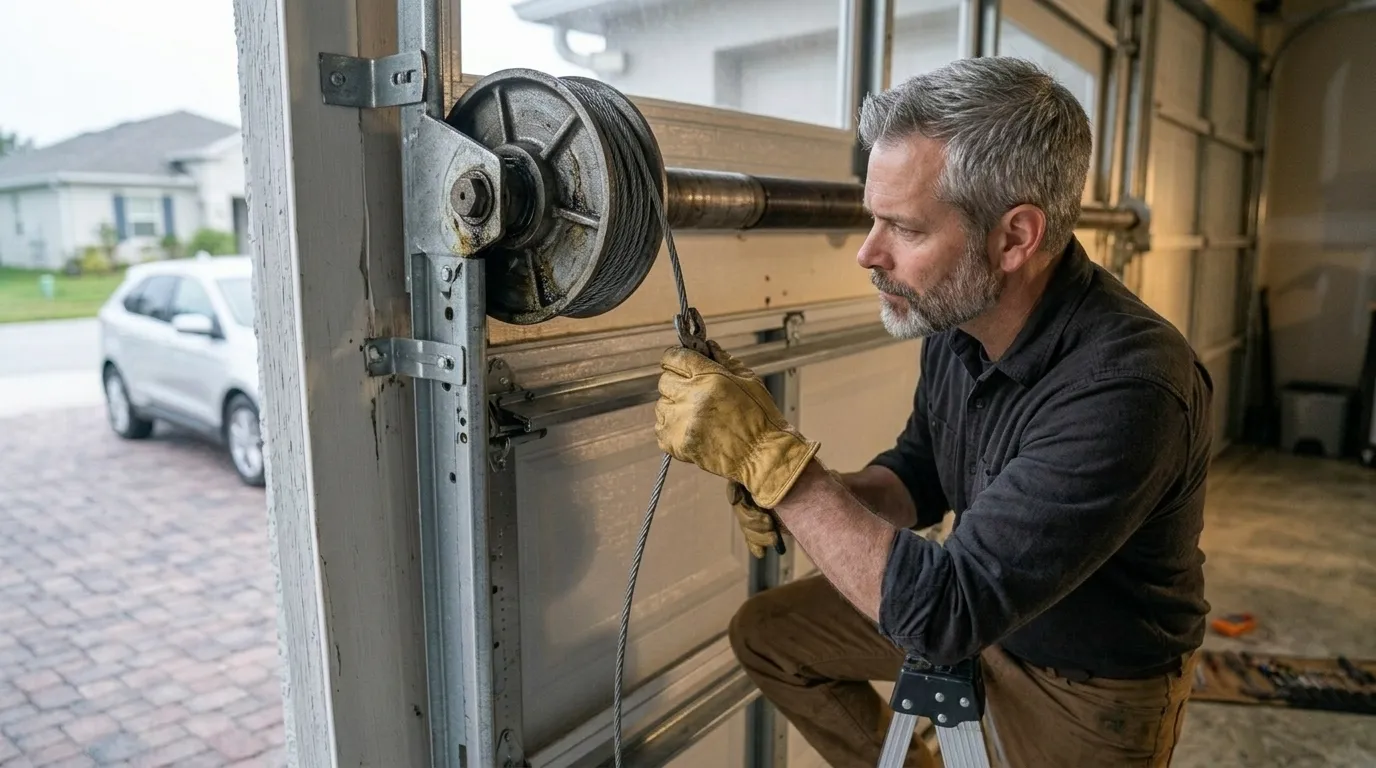
A new opener install isn't just bolting a motor to the ceiling. On a lot of houses in this area, the header above the door was framed for whatever opener was standard when the house went up - and with housing here running from 1938 through 2005, median around 1966, that means a lot of different brackets, rail lengths, and mounting heights showing up on the same street. We pull the old unit, check the header for rot or undersized framing, swap out worn hardware while we're up there, and set the new opener to the track and spring weight actually on your door - not a generic setting. Chain-drive, belt-drive, and screw-drive all get sized differently depending on door weight and headroom, and older torsion setups from the 60s and 70s sometimes need a bracket adapter that newer openers don't ship with. We also wire in the wall control and safety sensors and test travel limits and force settings before we call it done. One limitation worth saying plainly: if your header is undersized or the framing is compromised, that's a carpentry fix first - we won't hang a new opener on a header that can't take the load, and we'll tell you that before we start.
Most calls start the same way: the opener runs but the door won't fully close, or it reverses partway up for no clear reason. On older units - and there are plenty still running in houses built in the 60s and 70s across this area - the logic board or the capacitor goes first, and the motor keeps humming while nothing else works right. Grinding or a delayed start usually points to a worn gear inside the housing rather than anything wrong with the opener's brain. In colder months, the cold-severe climate here slows the grease in the drive mechanism, so an opener that worked fine in October can strain and stall by January. If your remote works but the wall button doesn't, or vice versa, that's usually a wiring issue at the head unit, not the opener itself. None of these are dramatic failures - they're slow ones, and by the time the door won't open at all, the opener's usually been struggling for months.
A straight swap - same mount, same door, no header work - is a same-day job once we're on site with the right unit. Where it runs longer is when the header needs reinforcing, when the existing wiring doesn't meet current code, or when the door itself is heavier than the old opener was ever rated for and the whole drive assembly needs to change, not just the motor. Houses built before the 1980s in this area sometimes have doors that were upgraded once already - heavier insulated panels bolted onto original hardware - and that mismatch adds time we can't know about until we're looking at it in person. We size the job on-site, not over the phone, because guessing at header condition or wiring age from a photo gets homeowners a wrong estimate more often than a right one.
This is a cold-climate area, and cold-severe conditions are hard on garage door openers in a specific way: grease thickens, gaskets stiffen, and the extra torque needed to move a stiff door in January puts more strain on a motor than it was designed for in mild weather. Combine that with housing stock that runs from 1938 to 2005 - much of it concentrated in the 1960s and 70s - and you get a lot of openers that were installed decades ago on doors and headers that predate modern safety codes and modern insulated panels. An opener rated for a lightweight 1970s wood door struggles when that door gets replaced with a heavier insulated one and nobody upsizes the motor to match. Across the broader service area - 139,755 households and roughly 80,126 owner-occupied houses - this mismatch between opener age, door weight, and winter strain is the single most common reason we get called out for opener installs rather than opener repairs.
Usually yes. Most opener installs on older houses in this area don't require touching the door - we match the opener to the door's existing weight and spring setup. The exception is if the header framing can't support a modern opener bracket, which we check before starting.
Cold thickens the grease in the drive mechanism and stiffens the door's weatherseal, both of which add resistance the motor has to overcome. In a cold-severe climate like this one, that extra strain in winter is normal and it's part of why older openers wear out faster here than in milder regions.
We size the opener to your door's actual weight, spring type, and headroom, not a one-size default. Houses built across different decades in this area often have different track and header setups, so what fits next door doesn't always fit yours.
We won't mount a new opener on framing that can't safely carry the load. If we find that during the job, we'll stop and explain what carpentry work needs to happen first, rather than installing something that could fail later.
By Neighborhood
We also handle opener installation in these Freehold-area suburbs.
Call now or request a free quote - same-day service on most repairs, upfront written pricing.
