Freehold, NJ · Garage Door Service
Dented or cracked garage door panels are common on Freehold's 1960s-70s housing stock. We match panels and replace sections without swapping the whole door.
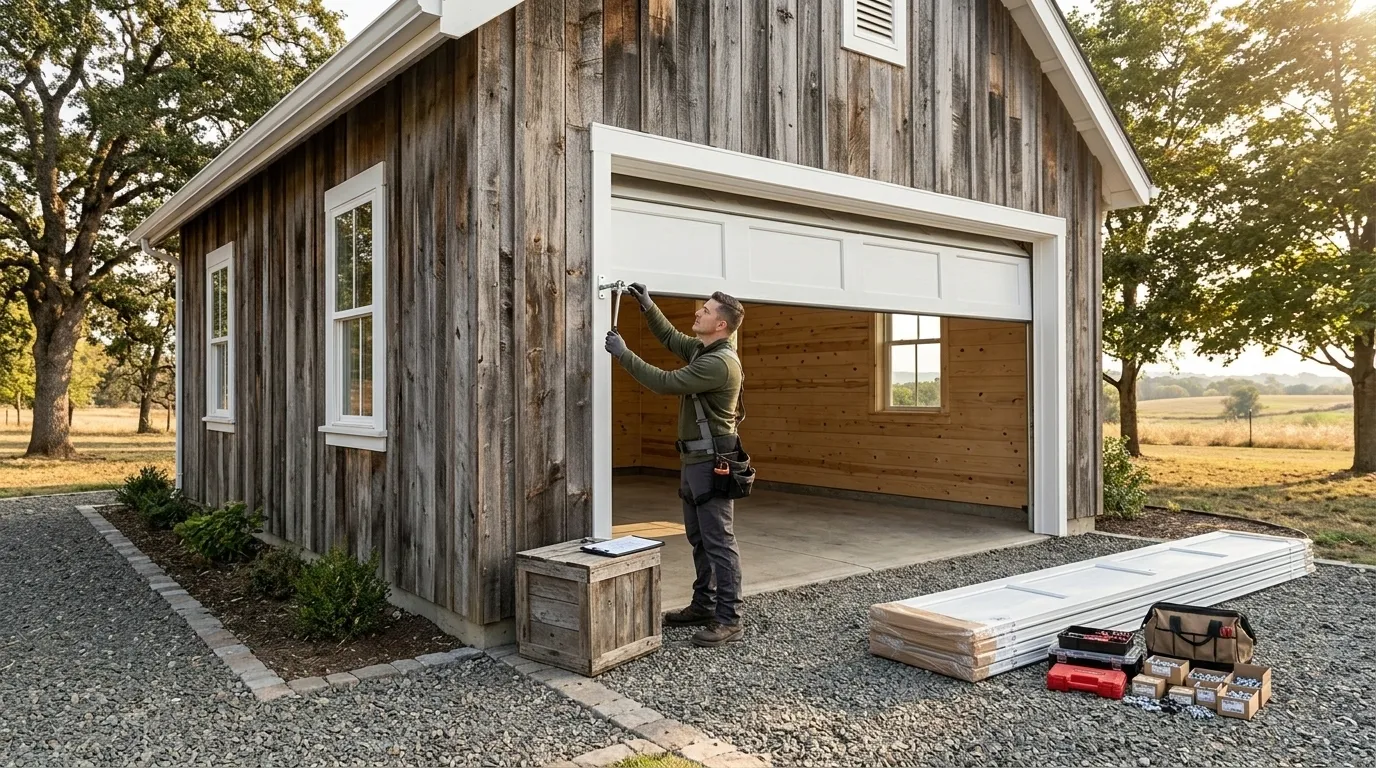
A garage door is built in horizontal sections, and when one panel gets dented, cracked, or rusted through, you don't have to replace the whole door. The job is finding a matching panel - same width, same groove profile, same color if the door hasn't faded past matching - and swapping just that section in.
On steel doors this usually means removing the hinges above and below the damaged section, sliding the panel out of the track, and fitting the replacement before re-hanging the hardware. On older doors from the 1960s and 70s, the harder part isn't the swap, it's sourcing. A lot of that stock used panel profiles and hinge spacing that manufacturers stopped making years ago, so we're often ordering from a supplier that still carries legacy sizes rather than pulling from a shelf.
If the door is a single continuous panel design instead of sectional - some of the older builds in this area are - there's no partial swap. That's a full door replacement, and we'll tell you that up front rather than quote a panel job that won't work.
We also check the track and rollers on the damaged side while the panel's out. A bent panel often means something hit the door hard enough to knock the track out of alignment too, and putting a new panel on a bent track just dents it again.
Most calls start with a visible dent - a car bumper, a thrown snowball turned to ice, a kid's bike. But the panels that fail on their own, without impact, are the ones we see most in houses built in the median year for this area, 1966. Steel panels from that era don't have the same rust-resistant coating as newer stock, and decades of freeze-thaw cycling in a cold climate work moisture into the seams between panels until the steel bubbles and flakes from the inside out.
Wood panels from the same building era show it differently: swelling at the bottom section where snowmelt sits against the door, then splitting once that wood dries out again each spring. You'll see the paint crack in a line before the panel itself gives.
Either way, once one panel goes, the door runs unevenly. It'll close a little crooked, the weatherstrip along that section won't seal, and the opener has to work harder to force it flush, which shortens the life of the opener and the springs both.
A single panel swap on a door with parts we can get locally is usually a same-day job once the panel's on the truck. The variable is sourcing, not labor. If the panel is a common modern profile, it's often a next-day turnaround. If it's matching an older sectional profile from the housing stock common through this area - anything built well before 2000 - lead time on the part itself can run longer than the repair.
We won't quote you a firm date on parts we haven't located yet. That's the honest limitation here: we can tell you fast how long the labor takes, but a legacy panel might sit on backorder for a stretch before it ships. When that happens on a two-car door, we'll talk through whether waiting on the exact match makes more sense than replacing both panels on that side with new stock so the door at least matches itself.
This area's housing runs from 1938 to 2005 with the bulk of it built through the 1960s and 70s, across dozens of neighborhoods in every direction from town. That's a lot of doors that are original or one replacement removed from original, carrying steel or wood panels from an era before insulated cores and improved coatings became standard.
Pair that housing age with a cold, severe climate band and you get a specific failure pattern: panels that were fine for decades start showing seam rust or wood splitting once enough freeze-thaw cycles have run through them. It's not one hard winter that does it - it's the accumulated cycling on materials that were never built to shed water the way a modern insulated panel does.
We cover panel replacement across the towns in this service radius - from East Freehold and Yorketown out through Colts Neck, Farmingdale, and the rest - and the pattern holds across most of it, because the housing ages line up. The exact fix for your street, your door brand, and your panel profile is what the individual town pages under this one are for.
Usually, yes, if the door is sectional and the panel profile is still available. If it's an older continuous-panel door, or the panel profile is a rare legacy size we can't source, a full door replacement ends up being the realistic option, and we'll say so before you pay for a quote.
Close, but rarely exact. Paint fades unevenly over years of sun and weather, so a new panel next to a 20 or 30-year-old section will usually show a slight difference until the new one weathers in. We can talk about a full re-paint or refinish if an exact match matters to you.
On older steel doors without a full protective coating, moisture works into the seams between panels rather than pooling on the face. Freeze-thaw cycling through a cold winter pushes that moisture deeper each year, so the bubbling and flaking you see on the surface is often the last stage of rust that started years earlier.
By Neighborhood
We also handle panel replacement in these Freehold-area suburbs.
Call now or request a free quote - same-day service on most repairs, upfront written pricing.
