Freehold, NJ · Garage Door Service
Colts Neck homes built around 1980 still run original panel hardware. See what fails first, what a panel swap costs, and how the job gets booked from Freehold.
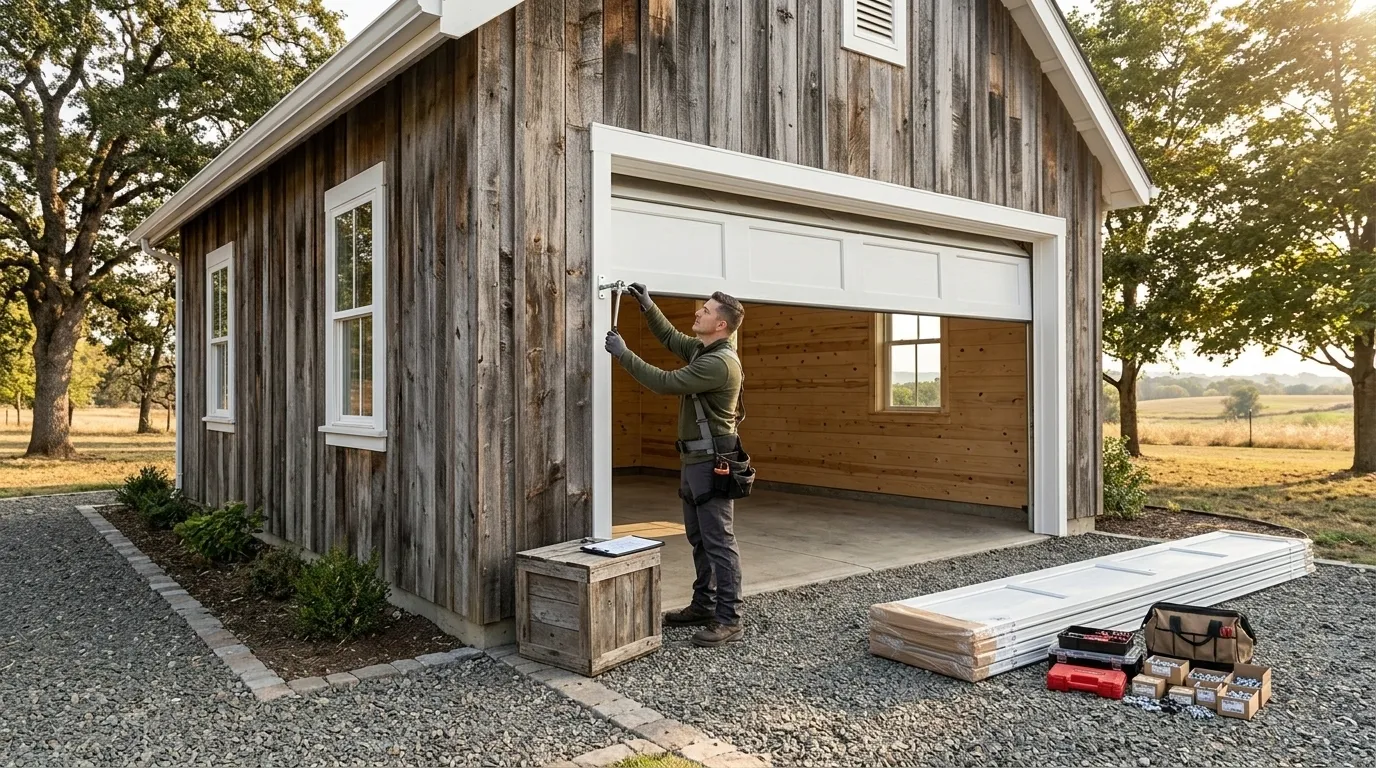
Most houses in Colts Neck went up around 1980, which puts the garage door itself squarely in its fourth decade. That's long past the point where the original panels are still doing the job they were built for. What's notable is how much of the *rest* of the door usually never got touched - the hinges, the end stiles, sometimes even the original track brackets are still the ones that shipped with the house. A homeowner calls about one dented or bowed panel, and what we're actually looking at is a door where the steel skin failed decades before anyone budgeted for it, while the bones underneath kept working fine. That mismatch - one bad section on hardware that's otherwise sound - is the single most common panel call we get from this part of the county, and it's why panel-only replacement makes sense here far more often than a full door swap.
A door built around 1980 predates the thicker, better-insulated steel that's standard now. Panels from that era are thinner-gauge and more prone to denting from a stray basketball or a trailer hitch backing in wrong, and once one panel is bent, the whole section stops tracking true. Add New Jersey's cold-band winters - real freeze-thaw cycles, not just a few cold nights - and thin steel that's already stressed at a seam starts to crack rather than just dent. Colts Neck's household income is well above the wider service area's median, which tends to mean bigger doors - two-car and sometimes oversized single-bay openings - and a bigger door puts more torque through a weak panel every time it cycles. None of that is unique to any one house here, but it's consistent across the neighborhood, and it's why we see more panel-only jobs out this way than full-unit replacements.
The panel isn't the whole story. On a door original to 1980, replacing just the bent section can expose a fit problem - panel profiles from that era aren't always a stock match anymore, and if the rest of the door has faded or chalked over forty-plus years, a new panel next to old ones can look like two different doors side by side. We'll tell you straight if that's what you're facing before we order anything. Rollers and hinges original to the house are usually the next thing to go once a panel's replaced and the door starts cycling smoothly again - the old hardware was fine carrying a bent door slowly, but a properly aligned door moves faster and puts different stress on worn rollers. We check that at the same visit rather than coming back for it.
We run out of Freehold, about 6 miles from Colts Neck, so getting a truck out isn't the issue - matching the panel is. Because so much of the stock here is original to 1980, we need the door's brand and panel profile before we order, not after. A photo of the full door and the section that's damaged, plus any model tag on the inside of the frame, saves a wasted first trip. If the panel's discontinued, we'll tell you that on the phone, not standing in your driveway, and we'll walk through whether a close-match panel or a full replacement makes more sense for that door.
It usually starts small: a section that doesn't sit flush, a gap at the bottom corner when the door's down, a scrape mark low on the panel where it's been dragging. Sometimes it's a dent from a car bumper that seemed cosmetic until the door started binding on the track. On a 1980-era door, cracking along a seam after a hard freeze is common too - the steel's had four decades of expansion and contraction and it's not as forgiving as it was in year one. If the door is still opening and closing but sounds different, or the panel's visibly bowed inward, that's the point to call before the section fails and takes the opener's motor strain with it.
We don't have a flat number to quote here without seeing the door - panel pricing depends on the brand, whether it's a stock match or a special order, and whether insulation's involved on a door of this age, which usually wasn't insulated to begin with. What we can tell you is that panel-only replacement is consistently cheaper than a full door swap on houses like these, where the frame and track are still sound. If your door's had more than one panel go, or the springs are original too, we'll say so plainly - sometimes a full replacement is the better spend, and we won't run up a bill patching a door that's better off retired.
Depends on the brand. Some manufacturers kept the same panel profile for decades and others changed tooling more than once. We check the model tag or brand markings before ordering - if it's discontinued, we'll say so and go over close-match options or a full panel-set swap instead.
No, we run out of Freehold, about 6 miles away. That doesn't change how the job's booked - we still need photos and the door's model info ahead of the visit so the right panel is on the truck.
Usually yes, especially on houses like Colts Neck's where the frame, track, and often the original hinges are still sound. Panel-only replacement is the more common and cheaper fix here - full door replacement only makes sense once multiple panels or the springs have failed too.
Steel from the 1980 era is thinner-gauge than what's made now, and after enough winters of freeze-thaw cycling, a seam that's already stressed from an old dent can crack instead of flexing. It's more common on older panels than newer insulated ones.
Call now or request a free quote - same-day service on most repairs, upfront written pricing.
