Freehold, NJ · Garage Door Service
East Freehold homes run newer, 1979-median builds on steel doors. See why the repair-or-replace call differs here and what our trucks carry out from Freehold.
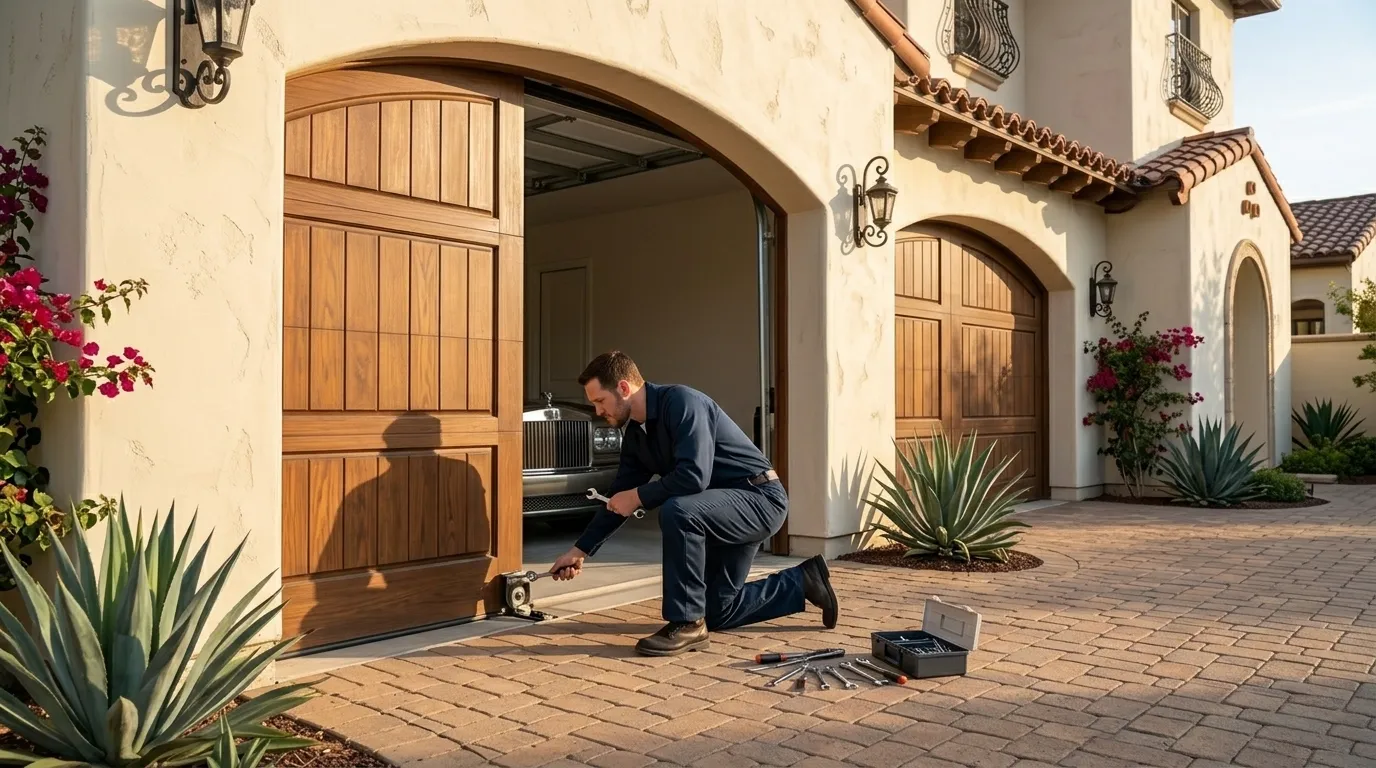
East Freehold's median household income sits at $195,804, well above the $123,661 median across the rest of our service area. That number matters here more than most places, because it changes where the repair-or-replace line actually falls. On a lot of the doors we see elsewhere, a $300 spring job is the obvious call. Here, homeowners are just as likely to ask us to price a full replacement against a repair on the spot, and at this income level that's often the more sensible math over a 10-year window.
We run this job out of Freehold, about two miles away, so there's no separate branch or crew based in East Freehold itself - just a short drive. Booking works the same way it does for the rest of the coverage area: you call, we ask what the door is doing (won't open, won't close, loud on the way up, opener clicking but the door not moving), and we bring the parts we expect to need based on that. For the general rundown of what we do across the wider area, see the main Freehold service page; this page is about the doors we actually find in this pocket of town. You can also check the East Freehold coverage page for the area we're describing.
East Freehold's housing runs newer than a lot of what we cover - the median build year here lands around 1979, versus a service-area median closer to 1966. That thirteen-year gap matters on a garage door. A 1979 build is past the era of the old wood slab doors on side-mounted torsion springs; you're mostly looking at steel raised-panel sections on extension spring hardware, sometimes with a chain-drive opener from a later retrofit.
The fault pattern follows the hardware. Extension springs stretch and sag well before they visibly snap, so the door starts moving slower and heavier months before anyone calls - it's not a sudden break so much as a slow give. Cold is the other factor: this area sits in a climate band we'd call cold and severe, and that's rough on stretched-steel spring coils and on the nylon rollers that shipped standard on doors from this period. They get brittle, then they crack on a hard freeze morning, right when the door gets used the most.
With 1,685 households in East Freehold, this isn't a huge pocket, but the housing stock is consistent enough that we see the same failure show up again and again: a door that's noticeably slower before it's noticeably broken.
On a house from this era, the job usually starts with the extension springs, not the torsion setup you'd expect on an older or a much newer build. We pull both springs even if only one has failed - they age together, and replacing one leaves the other due to go within a season, usually during the next cold stretch.
Rollers come next. If the door's original 1979-era hardware is still in, the nylon rollers are almost always past their service life, and we swap them out with the springs rather than send a second truck later for a problem we already saw. We check the track alignment at the same time, since a sagging spring lets the door ride unevenly and walk the rollers out of the track over time.
Weatherstripping gets a look too. In a cold-and-severe climate band, a gapped bottom seal isn't cosmetic - it lets in the draft that stiffens the springs further and fogs up anything stored near the door. If the opener is original to the house, we test the circuit board and travel limits before assuming it just needs a new remote; boards from that generation fail in ways that look like a sensor problem but aren't.
For the extension-spring, steel-panel doors common in East Freehold, we carry the standard spring sizes, replacement rollers (nylon and steel), and cable on the truck, along with weatherstripping cut for the seal profiles used on doors from the late 1970s and 1980s builds. Opener parts - logic boards, drive gears, safety sensors - we stock the common models but not every legacy board; if your opener is a less common brand from that era, that part sometimes has to be ordered in, and we'll tell you that on the spot rather than let you assume same-day.
One honest limit: if a door has been sitting on a failed spring for a while, the track and rollers can wear unevenly in ways that repair won't fully fix, and at that point we'll say so instead of running up a bill on a door that's better off replaced. We'd rather price a new door accurately than sell a repair that gets you six more months.
Depends on the failure. If it's a sensor or a worn drive gear on an otherwise sound board, repair usually makes sense. If the board itself is failing intermittently, we'll often recommend replacement, especially given the income level and home values typical in East Freehold - a new opener pays for itself faster here.
No. We run out of Freehold, about two miles away, and cover East Freehold as part of that route. There's no separate depot here, so response depends on truck availability out of Freehold that day.
That's usually a sagging extension spring, common on doors built in the late 1970s. It stretches gradually rather than snapping, so the door gets slower and heavier for months before it fails outright. Worth having checked before it does.
Steel raised-panel sections on extension spring hardware is the most common setup we find on East Freehold homes from that build era, sometimes retrofitted later with a chain-drive opener.
Call now or request a free quote - same-day service on most repairs, upfront written pricing.
