Freehold, NJ · Garage Door Service
Vista Center homes were mostly built after 2005 - newer garages, newer brackets, different opener math. Freehold Garage Door Pros installs from 7 miles out.
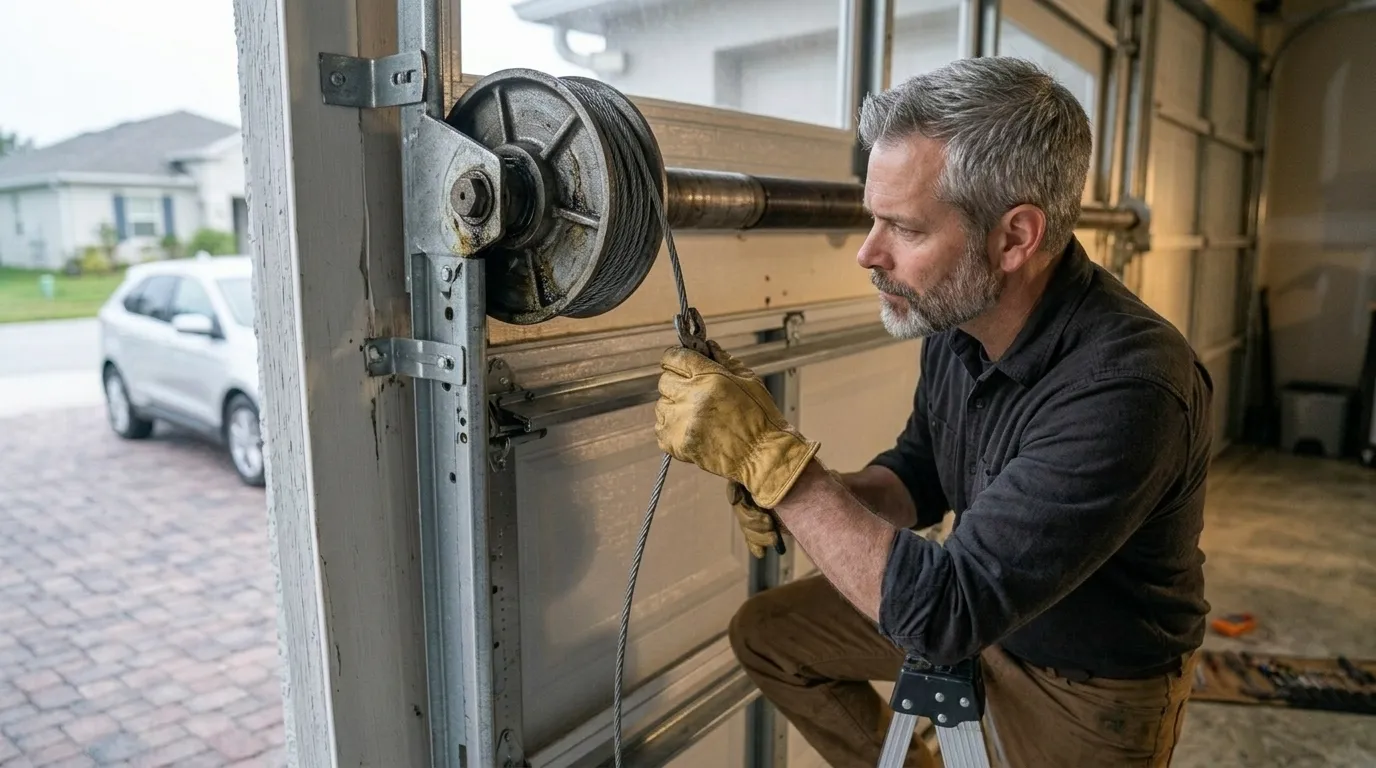
A garage door opener kit from a home center looks simple until you're standing on a ladder with a chain hoist in one hand and a wall console in the other. The mechanical part - bolting the rail to the header, wiring the safety sensors, setting travel limits - is doable for someone comfortable with tools and a weekend. The part that trips people up is the safety reversal test and the force adjustment, which matter more on newer sectional doors than on older single-panel ones because the springs and cable geometry are tighter.
With a median household income of $131,194 in Vista Center, well above the $123,661 average across the rest of the service area, most owners here are installing on a door that's still under 20 years old rather than patching around a door built in the 1960s. That changes the math: you're not fighting old hardware, you're matching a new opener to a door that's already square, balanced, and on modern brackets. That's a genuinely easier DIY case than in the older sections of the coverage area - but the safety wiring and force settings still aren't a place to guess.
Vista Center's housing stock runs newer than almost anywhere else in the territory - homes here are mostly built in and after 2005, against a service-area median build year of 1966. That means the garages were designed for modern sectional doors and pre-drilled opener brackets from day one, not retrofitted later. The failure mode here isn't old hardware fighting a new motor. It's the opposite: owners install an underpowered or mismatched opener on a door that's heavier or wider than the builder-grade unit it replaced, and the opener strains from month one.
The cold-severe climate band that covers this whole area still applies here the same as anywhere else in the territory - winter cold affects the lift springs and the opener's cold-start torque no matter how new the door is. A 2005 build doesn't insulate you from that. So the local failure pattern is: newer door, correctly installed door, wrong-capacity opener chosen to save money up front, then a strained motor by year three or four.
The opener runs but the door lags a half-second at the top before catching - a sign the unit is undersized for the door weight. Or the wall console works fine but the remote range is short, which on a newer build usually means the antenna wire is pinched behind a bracket that wasn't there on older-style installs. You'll also see the light blink and the door reverse partway down on cold mornings, which reads like a sensor problem but is more often the opener's cold-start logic reacting to a spring that hasn't loosened up yet.
Because the homes here are newer, you don't see the rust-frozen track or the crumbling wood jamb that shows up on 1960s stock elsewhere in the service area. What you see instead is wear concentrated on the motor and gearing - the parts doing the work - rather than on the door structure itself.
A straightforward swap - pulling an old opener and mounting a new one on existing rail and bracket points - runs faster on newer construction like Vista Center's than on older homes, since the header framing and door balance are already correct and don't need rebuilding first. Where it runs longer is when the existing opener was undersized for the door and the whole rail, mounting plate, and bracket set need to come out with it, not just the motor head.
We travel the seven miles out from Freehold for these jobs, so the install itself is scheduled rather than squeezed into a same-day stop. That's worth knowing if you're trying to plan around a work day - tell us up front whether it's a straight swap or a full rail replacement, and we'll give you a real number for the job, not the fastest-case one.
For a like-for-like swap: remove the old motor unit, keep the existing rail if it's straight and not worn at the drive gear, mount the new opener head, rewire the safety sensors, set the travel limits, and run the reversal force test - that last step is not optional, it's the one thing that keeps a closing door from becoming dangerous.
When the door itself is heavier than the old opener was rated for - common when an owner swapped from a single-layer door to an insulated one and kept the original opener - the fix is a capacity upgrade, not a repair. That means new rail, new mounting hardware, sometimes new header bracing to handle the torque. On a 2005-and-newer build, the header framing is usually already sized for this, which keeps the labor down. We'll tell you plainly if your existing door doesn't need a new opener at all - sometimes the fix is a $20 sensor alignment, and we'd rather say that than sell a motor you don't need.
Vista Center is a small pocket - 1,047 households - so we're not running a route through here every day the way we might closer to Freehold. That means booking ahead gets you a firmer window than trying to catch a same-day slot. Tell us the door's age, whether it's the original builder opener, and what's going wrong (slow, noisy, reversing, dead) and we can usually tell you over the phone whether it's a swap or a bigger job before the truck rolls seven miles out.
See the coverage page for Vista Center for what else we handle in this pocket of the service area, or check the main opener installation page for how we handle the job across the wider territory.
Possible, especially if the door was upgraded to an insulated model after the house was built. Newer Vista Center homes usually came with builder-grade openers sized for the original door, so if a heavier door went in later, the opener may be undersized. Tell us the door material and we can usually judge capacity over the phone before we come out.
Not a different opener exactly, but the install is usually simpler. Homes built 2005 and later, like most in Vista Center, have header framing and brackets already sized for modern sectional doors, so there's less rebuilding before the opener goes in compared to homes built decades earlier.
About seven miles. We travel out for scheduled opener installs; it's not a same-day drop-in stop, so booking ahead gets you a firmer time window than calling the morning you need it.
This area sits in a cold-severe climate band, and opener motors read a stiff, cold spring as extra resistance, which can trigger a safety reversal partway down. It's not usually a broken sensor - check if it happens only on the coldest mornings before assuming a part failed.
Call now or request a free quote - same-day service on most repairs, upfront written pricing.
