Freehold, NJ · Garage Door Service
Vista Center's homes are newer than most of the Freehold area, which means opener faults here run to circuit boards and sensors, not worn-out chain drives. Book a visit from Freehold.
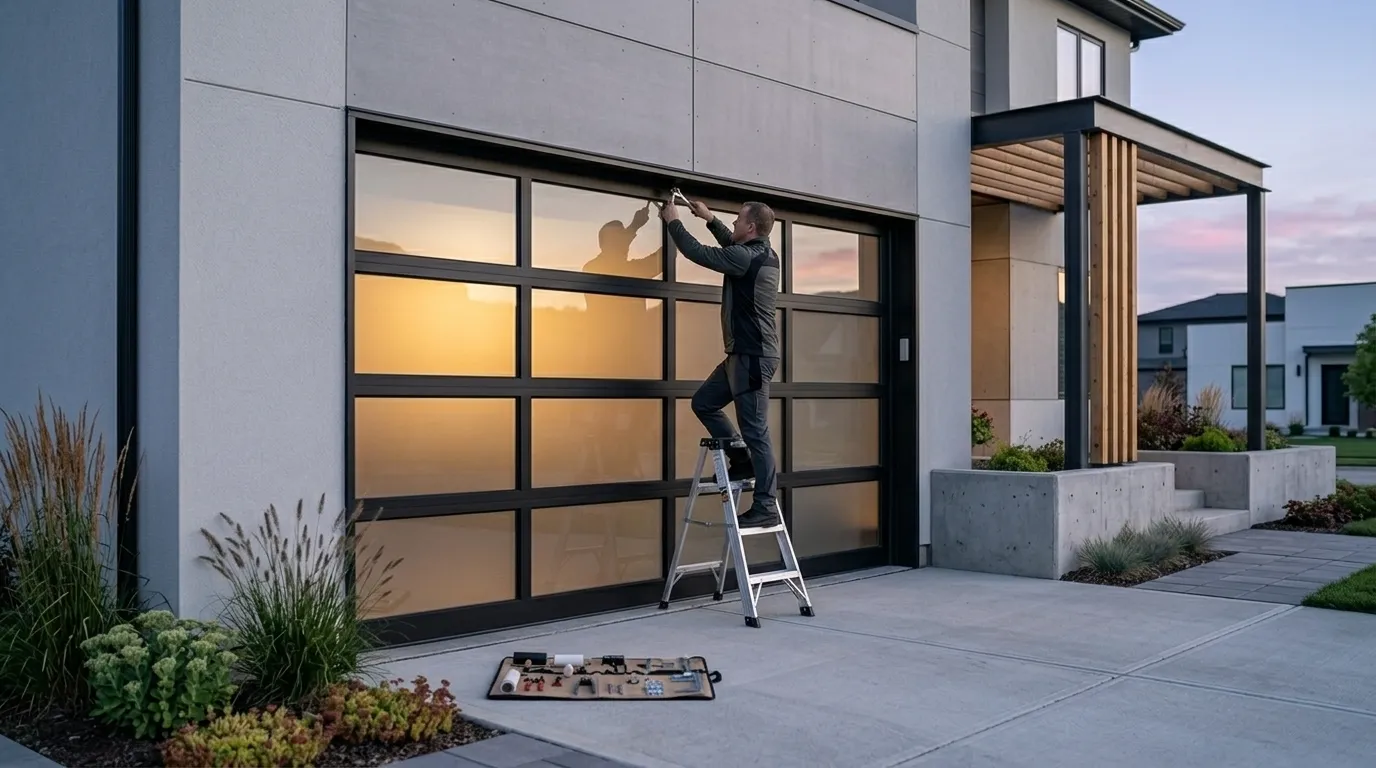
A lot of opener trouble in Vista Center looks like a DIY job because the houses are young enough that the opener itself is usually the original unit, not a decades-old replacement bolted on top of an older bracket. Resetting a remote, reprogramming a keypad, or swapping a 9-volt backup battery in the unit - those are fine to try yourself, and you don't need a truck out here for that.
Where it stops being a weekend job is anything involving the logic board, the safety sensor alignment, or a motor that hums but won't lift. Newer openers built after the early 2000s run on circuit boards with diagnostic codes, not simple relay switches, and guessing wrong can fry a board that isn't cheap to replace. If your opener is flashing an error code or the sensors show a light but the door still won't close, that's a call, not a project.
One honest limitation: if the board itself is dead, we often can't get an exact-match replacement board same-day. Some manufacturers stock them fast, others take a week or more, and we'll tell you which situation you're in before we take the job.
Freehold's own housing stock runs old - median year built back in 1966, with plenty of houses from the late '30s through the '60s still carrying original hardware. Vista Center doesn't fit that pattern. The median build year here lands around 2005, which means most openers on this side of town are already second-generation units with circuit boards, rolling-code remotes, and photo-eye sensors as standard equipment from day one.
That changes what breaks. Older Freehold-area doors fail at the spring or the drum because the mechanical hardware wears out. Vista Center openers fail at the electronics - a sensor knocked out of alignment during a driveway project, a board that trips on a power surge, a logic chip that just ages out after fifteen-plus years of daily use. It's a different repair conversation from the one we have three miles closer to town.
The area is also small and tight - a little over a thousand households - so the failures we see tend to cluster by build phase rather than by decade the way they do in the older parts of the coverage area.
The opener runs but the door won't move - usually a stripped gear inside the unit, common once a board-driven motor hits its tenth or eleventh winter here in a cold-climate zone. The light blinks a set number of times and stops - that's a diagnostic code, and on most units built in this era it points straight to a sensor or a limit-switch problem rather than anything mechanical.
Sometimes it's simpler: the door reverses right before it touches the floor. On these newer setups that's almost always a safety sensor seeing something it shouldn't, not a spring problem. And in winter, a board that worked fine in October can start missing signals once overnight temperatures drop hard - cold solder joints and cold capacitors don't like this region's winters, and severe cold swings are exactly what this area gets.
Most sensor realignments and board-level diagnostics on a Vista Center opener run under an hour once we're on site - these are newer, more standardized units, and the failure points are fewer than on older mechanical setups. A straight board swap, when we're carrying the right part, is usually done in the same visit.
Where it runs longer is when the board isn't a common one we stock on the truck. Because the homes here are newer and came with a narrower range of opener brands installed by builders around the same years, parts availability is usually decent - but not guaranteed. We'll confirm the model before we commit to a same-visit fix.
First step is always the diagnostic panel on the opener itself - the blink code tells us where to look before anything gets opened up. From there it's usually one of three things: realigning or replacing the photo-eye sensors, reseating or replacing the logic board, or replacing a worn drive gear inside the motor housing.
Because the opener stock here is newer, we're rarely dealing with obsolete parts the way we might on an original 1960s door with a retrofitted opener. That works in your favor on cost and turnaround. What we won't do is replace a board on a unit that's already showing motor wear elsewhere - if the gear and the board are both near end of life, we'll say so plainly and talk about full opener replacement instead of throwing a new board at an old motor.
We cover Vista Center from our Freehold shop, about seven miles out, so there's no separate branch or crew based in the neighborhood - just a truck making the trip when you call. Tell us the blink pattern or what the door is doing when you call, and we'll have a better idea of what's in the bag before we're on the driveway.
See our coverage page for Vista Center for the general service area, or if you're actually dealing with a spring, cable, or panel issue rather than the opener itself, that's a different repair - check our Freehold opener repair page for the broader service writeup.
Vista Center's homes were mostly built around the early 2000s, decades after much of the Freehold area's housing stock, which runs closer to a median year of 1966. That means the openers out here started life with circuit boards and photo-eye sensors as standard equipment, so the common failures are electronic - sensors and boards - rather than the worn mechanical hardware you see on older units.
No. We run out of Freehold, about seven miles away, and send a truck out for calls in Vista Center. There's no local branch or depot here, so response depends on the day's schedule rather than a standing crew in the neighborhood.
Yes. This area sits in a cold-climate band with severe winter swings, and board-driven openers can develop cold solder joints or capacitor issues over years of hard freezes. A unit that ran fine in October sometimes starts missing signals or throwing error codes once overnight temperatures drop hard in winter.
Depends what else is wearing. If the motor and drive gear are still solid, a board swap is usually the cheaper, faster call. If the gear's already worn and the board is dying too, we'll tell you plainly that a new board on a tired motor is money spent twice, and full replacement makes more sense.
Call now or request a free quote - same-day service on most repairs, upfront written pricing.
