Freehold, NJ · Garage Door Service
Vista Center's homes mostly date to 2005, later than the rest of Freehold's service area. That changes which panel faults show up and what a proper fix costs.
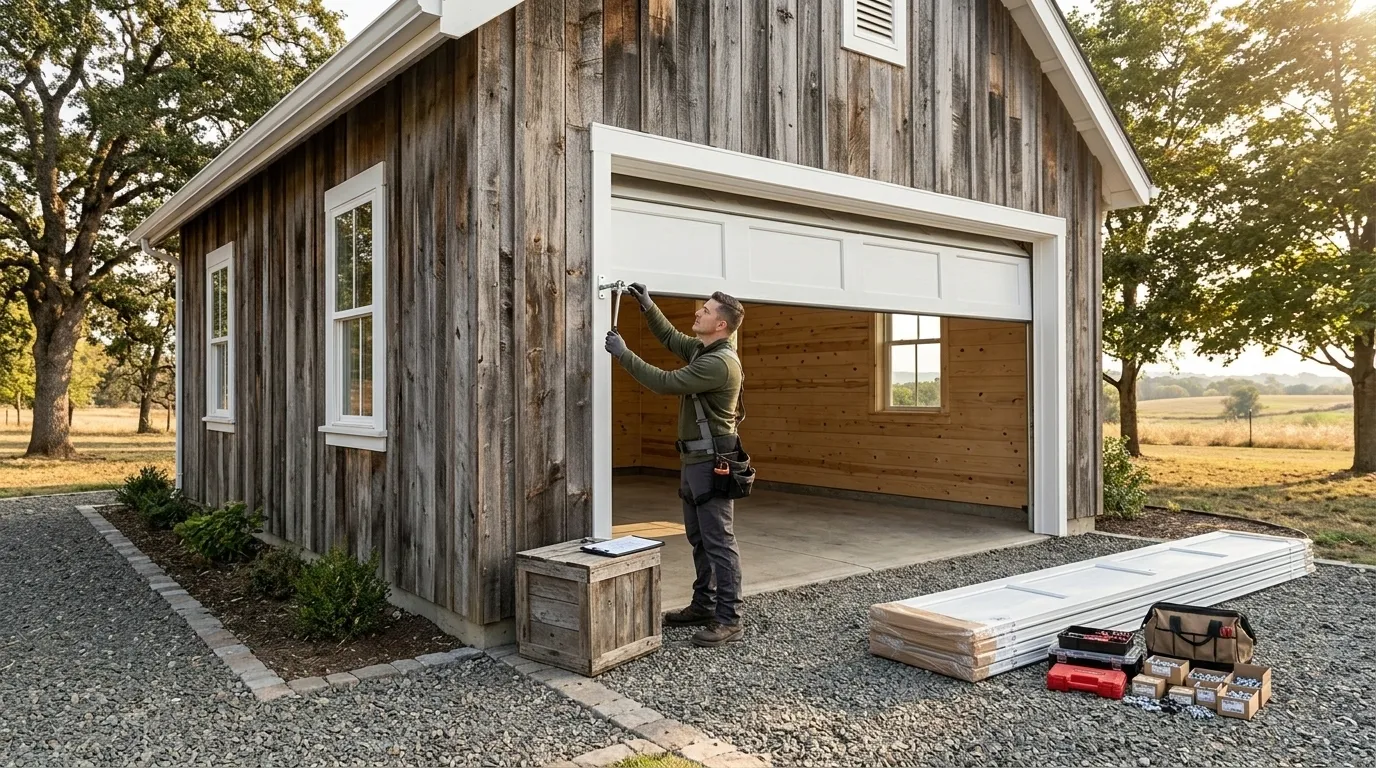
A single dented or cracked panel on a sectional door looks like a bolt-off, bolt-on job, and on paper it is. The trouble starts with matching. Vista Center's houses mostly went up around 2005, which is late for this part of the service area - most of the surrounding stock runs 1960s and 70s. That later build date means a lot of these doors are factory-finished steel or composite sectionals in colors and profiles that were common in the mid-2000s, not the plain white panels you'd swap on an older house. Order the wrong panel and it sits next to the others like a patch, wrong sheen, wrong rib spacing. You can pull the damaged section yourself if you're comfortable with a socket wrench and you're not touching a spring. What you can't easily do from a driveway is confirm the exact panel profile and color code before you buy - that takes the door's model plate or a look at the back of an undamaged section, and getting it wrong means a return shipment and another week of a door that doesn't close square.
Because the houses here are newer, the doors are newer too, which sounds like it should mean fewer problems. It shifts the problem instead of removing it. A door built in 2005 is old enough now that its exact panel style may already be discontinued by the original manufacturer, but the door itself hasn't failed enough for most owners to think about replacement - so when one panel gets hit by a car bumper or a basketball, you're chasing a part for a door that's fifteen to twenty years old, not brand new and not old enough to just replace outright. Add the climate here - winters cold enough that insulated steel is standard, not optional - and a mismatched panel isn't just cosmetic. A non-insulated replacement panel bolted next to insulated ones creates a cold spot and a seal gap right where the door meets the track.
Most calls start with a single panel that's visibly bent inward or has a crack along a seam, usually from an impact rather than age. On a 2005-era door, you'll also see the foam-core insulation showing through a crack rather than the solid wood core you'd find on older stock. Sometimes the fault isn't the panel at all but the roller bracket bolted to it - a hard hit can bend both, and if you only replace the skin, the door binds on the track a week later. On taller two-car doors, a hit low on one panel can rack the whole section slightly out of square, which shows up as a gap at one corner that wasn't there before.
A straight single-panel swap on a door where we can source a matching section usually runs a couple of hours once the part is on the truck - most of that is removing trim screws, unbolting hinges from the panel above and below, and re-hanging without disturbing the spring tension. It runs longer if the roller bracket or hinge is bent, since those get replaced rather than reused. Where it slows down is sourcing: if the exact panel profile from a 2005-built door isn't a current stock item, we're ordering from the manufacturer or a matching supplier, and that lead time isn't something we control from the truck. We'll tell you upfront if a color or profile match is going to take a special order rather than promise a same-visit fix we can't back up.
We start by pulling the model and section info off the door itself rather than guessing from the color you remember - on a door this age, that plate is often the only reliable way to confirm the exact panel and hinge pattern. Once we've got a matching panel, the job is unbolting the damaged section from the hinges above and below, swapping any bent hinges or roller brackets at the same time rather than reusing them, and re-hanging square before running the door through a full cycle to check for binding or a new gap at the seams. Given the cold-climate standard here, we check that the replacement section's insulation and seal match the rest of the door - a panel that looks right but seals worse will cost you on the heating bill and let more cold air into an attached garage.
We run this job out of Freehold, about 7 miles from Vista Center, so there's no local branch to call - one truck comes out to you. Because panel matching on a door from this era can mean a special order, the more useful first step is a photo of the damage and, if you can get it, a shot of the model plate inside the door track. That lets us start the parts search before the truck is even scheduled. See our coverage area for how we handle service across this stretch of Freehold's territory, or look at the full panel replacement page for how this job runs on the older housing stock closer to town.
Not always automatically. Vista Center's doors mostly date to around 2005, and some panel profiles and colors from that era are no longer a current stock item with the original manufacturer. We check the model plate first and tell you if it's a special order before we quote a timeline.
Usually just the panel, along with any hinge or roller bracket bent in the same impact. Full door replacement only makes sense if the track is racked, the opener is failing separately, or the panel simply isn't available anymore.
Yes, more here than in a mild climate. This area sits in a cold-severe band, so an insulated door with one non-insulated or mismatched panel creates a real cold spot and a seal gap right at that seam, not just a color difference.
No. We run out of Freehold, about 7 miles away, and send a truck out for the job. There's no separate branch or faster local-only slot for this suburb.
Call now or request a free quote - same-day service on most repairs, upfront written pricing.
