Freehold, NJ · Garage Door Service
A look at what actually happens on a Freehold garage door service call, tied to this town's 1960s-70s housing stock and cold-climate spring wear.
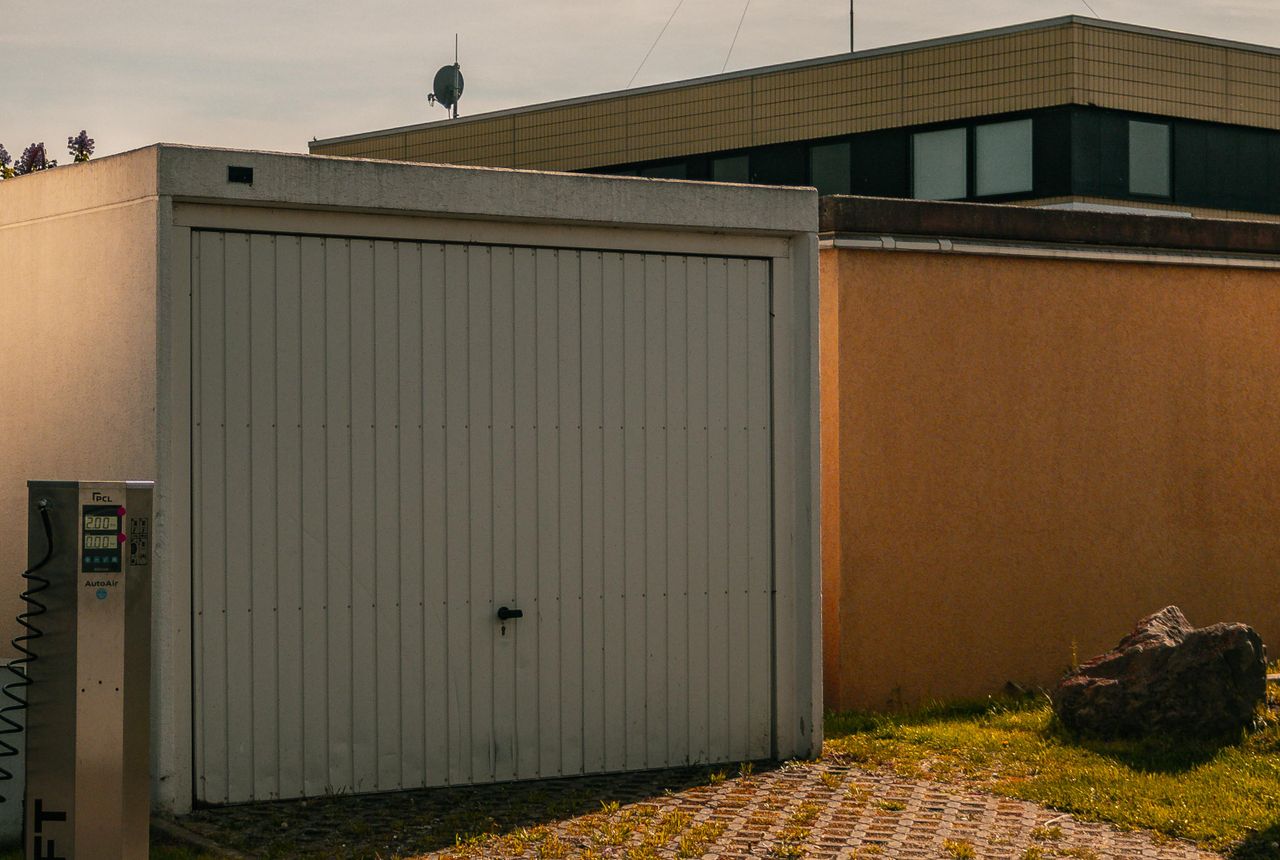
Most of the door hardware we get called out on in Freehold and the surrounding area sits on houses built between 1938 and 2005, with the bulk of that stock going up in the 1960s and 70s. That matters because a torsion spring rated for 10,000 cycles installed in 1968 has had over fifty winters to fatigue, and a lot of owners never touch the spring until it snaps mid-lift. A service call isn't just "the door won't open" - it's figuring out whether you're looking at a spring that's simply worn out on schedule, a track that's racked from decades of settling, or an opener from a later retrofit bolted onto original hardware that was never sized for it. In this area, with 72 named neighborhoods sharing that same mid-century build window, we see the same failure pattern over and over: original galvanized springs, original drums, and a panel or two swapped out somewhere along the way that doesn't quite match the rest.
Before you call anyone, look at three things. First, the spring above the door - if it's stretched, has a visible gap in the coil, or one half looks longer than the other, that's a broken torsion spring and the door should not be opened by hand or by the opener until it's replaced. Second, pull the release cord and lift the door manually. If it feels heavy or drops on its own, the spring tension is off, which is common on the older torsion setups still in place on a lot of homes here from that 1960s-70s build wave. Third, check the tracks for rust pitting at the bottom few feet - in a cold-climate area like this, road salt tracked in on tires and winter condensation both work on unpainted steel track over the years. None of this tells you the fix, but it tells you what to describe on the phone so the truck that shows up has the right spring size and cable length loaded, instead of a second trip.
The biggest mistake we see is treating a broken spring as an opener problem. The opener motor isn't built to lift the door's full weight on its own - the spring does that work, and the opener just adds the last bit of motion. When a spring goes on a heavier door, the motor strains, the gear inside can strip, and now you've turned a $200-and-change spring job into a spring-and-opener job. The second mistake, common on the older housing stock around Freehold, is assuming any door built before the 1980s is a lost cause and jumping straight to full replacement. Sometimes that's true - if the tracks are bent or the panels are rusted through, replacement is the honest answer. But plenty of these older doors have solid panels sitting on hardware that just needs new springs, rollers, and cable. We won't sell you a new door if the one you have can be put back to reliable with a spring and hardware job instead.
This area sits in a cold, severe climate band, and that shapes what actually wears out first. Steel contracts in low temperatures, which stiffens the torsion spring's coil action and adds real load right at the point of the year when a homeowner is opening the door multiple times a day for a car that's already cold-soaked. That's why so many spring failures cluster in winter rather than spread evenly through the year. It also means weatherstripping at the bottom panel and along the sides works harder here than it would somewhere with a milder band - a cracked or flattened seal lets cold air straight into an attached garage, and on the 1960s-70s builds common in this area, that garage often shares a wall with living space. One thing we won't do is promise a seal or insulation kit will meaningfully cut a heating bill - it helps comfort in the garage itself, but we don't have the numbers to back a bigger claim than that.
Cold makes steel less flexible, and this area sits in a cold, severe climate band, so the torsion spring is working against stiffer coil action right when daily use is highest. That combination is why winter is when most spring calls come in, rather than it being random.
A lot of houses in this area were built in that window, and it's common to find original torsion springs and drums still in place, sometimes with a later opener added on top. A service call can tell you whether that original hardware is still safe to run or due for replacement.
Often yes - if the panels and tracks are sound, a spring, cable, and roller job can bring an older door back to reliable. Replacement makes sense when the tracks are bent or panels are rusted through, and we'll tell you straight if that's what we're looking at.
It helps keep cold air out of the garage itself, which matters given the cold, severe climate here and how many homes in this area have an attached garage sharing a wall with living space. We don't have the numbers to promise a specific cut in your heating bill from it.
Call now or request a free quote - same-day service on most repairs, upfront written pricing.
