Freehold, NJ · Garage Door Service
Freehold homes built between 1938 and 2005 carry original hardware that wasn't built for New Jersey winters. We service springs, tracks, and openers on that stock.
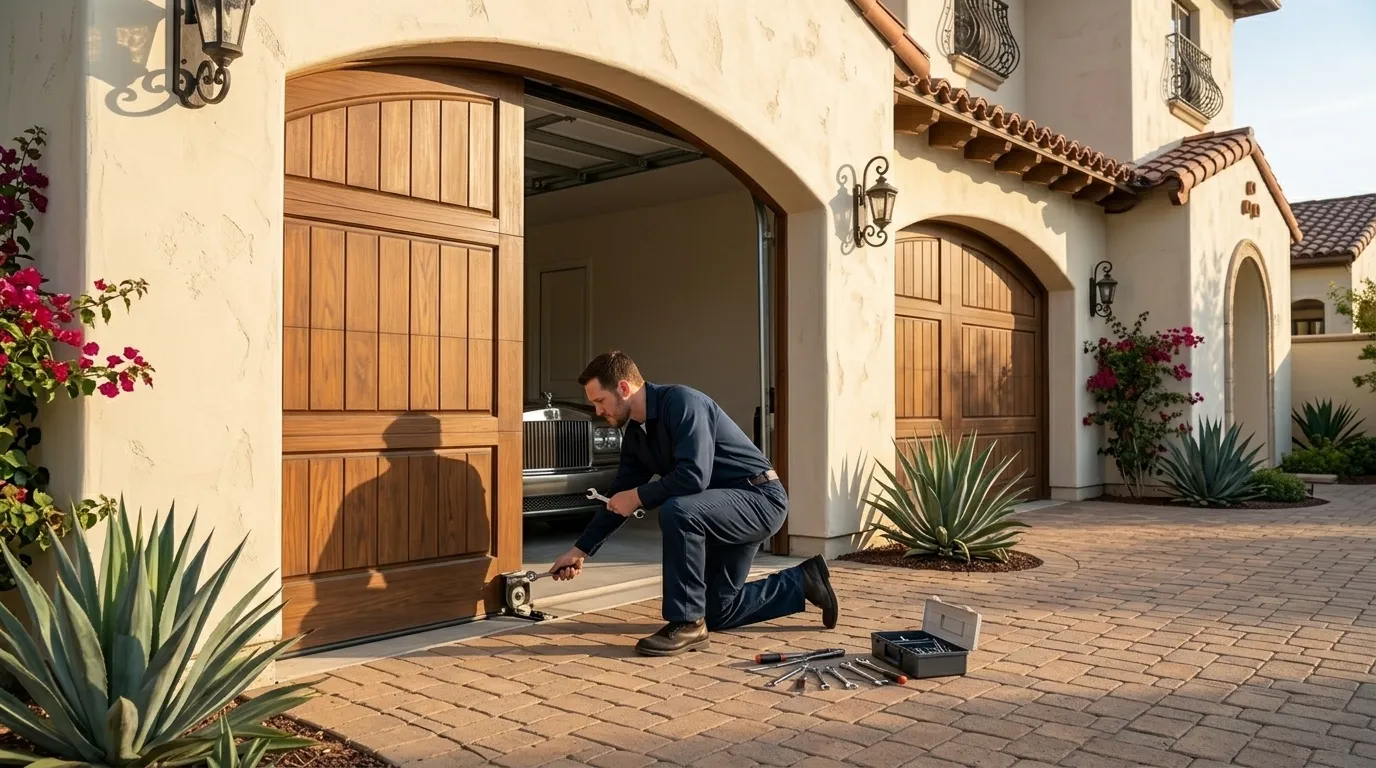
A full service call on a Freehold garage door means checking the parts that wear out on their own schedule, not just the ones that broke today. That's the torsion spring cycle count, the track alignment, roller condition, cable fraying at the drum, and the opener's force settings. On a house built in the median year for this area, 1966, you're usually looking at hardware that has been replaced piecemeal over decades - a newer opener bolted to an original track, or a spring swapped once in the 1990s and never touched since. We check the whole system, not just the loudest symptom, because on houses this age the parts talk to each other. A tight track throws off an opener's force reading. A dragging roller looks like a spring problem until you get it on a level. We tell you what's worn, what's failing, and what's fine, and we don't replace what doesn't need it. One limitation worth saying up front: if your door is a steel panel from the original build and the manufacturer no longer exists, we can service the hardware around it, but matching panels is sometimes not possible.
In Freehold's housing stock, most of it built between 1938 and 2005 with heavy concentration in the 1960s and 70s across the 72 named sections of town, service calls follow the age of the metal. Springs that were rated for a certain cycle count decades ago are past it now, and they don't fail quietly - they lose tension slowly, so the door gets heavier to lift by hand for weeks before anyone calls. Openers strain against that added resistance and burn out gears trying to compensate. Tracks on original hardware were often set for a lighter door than what's on the house now, after a panel replacement added weight the old track wasn't sized for. You'll hear it before you see it: a grinding pull on lift, a shudder partway up, or an opener that runs longer than it used to for the same door. None of that is dramatic on day one. It gets worse in a straight line until the spring lets go or the opener stops responding.
A standard service visit runs long enough to inspect the full system and make adjustments, not just to swap one obvious part. If everything on the door is original to a 1960s or 70s install, expect us to spend real time on alignment and hardware torque, since decades of settling shift a track's position by fractions of an inch that add up to real drag. If a part needs full replacement - a spring, a cable, a section of track - that's a separate conversation about the part itself, because we don't stock every gauge for every era of hardware on the truck. Some older sizes take longer to source than a same-day fix. We'll tell you at the door, not after we've started, if a part means a return trip. That's not us dragging out the job; it's us not guessing at a fix with the wrong-weight spring, which on a door this old is how you end up back at square one in six months.
This isn't a generic wear story - it's specific to what's on the ground here. Freehold's housing runs older than a lot of nearby townships, with a median build year of 1966, which means original torsion hardware is still common on doors that have had two or three openers cycle through them in the meantime. Layer on the region's cold, severe winter climate: steel contracts in low temperatures, grease inside bearings and drums stiffens, and a spring already near the end of its rated cycles is more likely to snap on a fifteen-degree morning than a mild one. That combination - older hardware plus real winter stress - is why service calls here cluster around cold snaps, not random days. It's also why sizing a replacement spring to the door's actual weight matters more in this area than in newer developments with lighter, better-balanced doors from the factory. A door that limped through a mild fall usually doesn't make it through the first hard freeze.
If your house dates to the 1960s or 70s, which covers a lot of Freehold, and nobody's serviced the spring or track in the last several years, it's worth a full look rather than just fixing the symptom you noticed. Age-related wear on one part usually means related wear nearby.
Cold steel contracts and lubricant inside bearings and rollers stiffens, adding resistance right when a spring near the end of its life has the least tension to spare. That's why failures cluster during hard freezes rather than spreading evenly through the year.
Sometimes, sometimes not. Manufacturers from that era often don't exist anymore, so matching an exact panel isn't always possible. We can usually service or replace the hardware around an original panel even when the panel itself can't be matched.
No. Older hardware sometimes uses gauges or wire sizes that aren't common stock, so a same-day fix isn't guaranteed on every job. We'll tell you at inspection if a part needs to be ordered rather than guess and install the wrong weight.
Call now or request a free quote - same-day service on most repairs, upfront written pricing.
