Freehold, NJ · Garage Door Service
Installing garage doors in Freehold's 1960s-era housing stock means matching old rough openings and cold-climate seals. Local install guide for homeowners in Freehold, NJ.
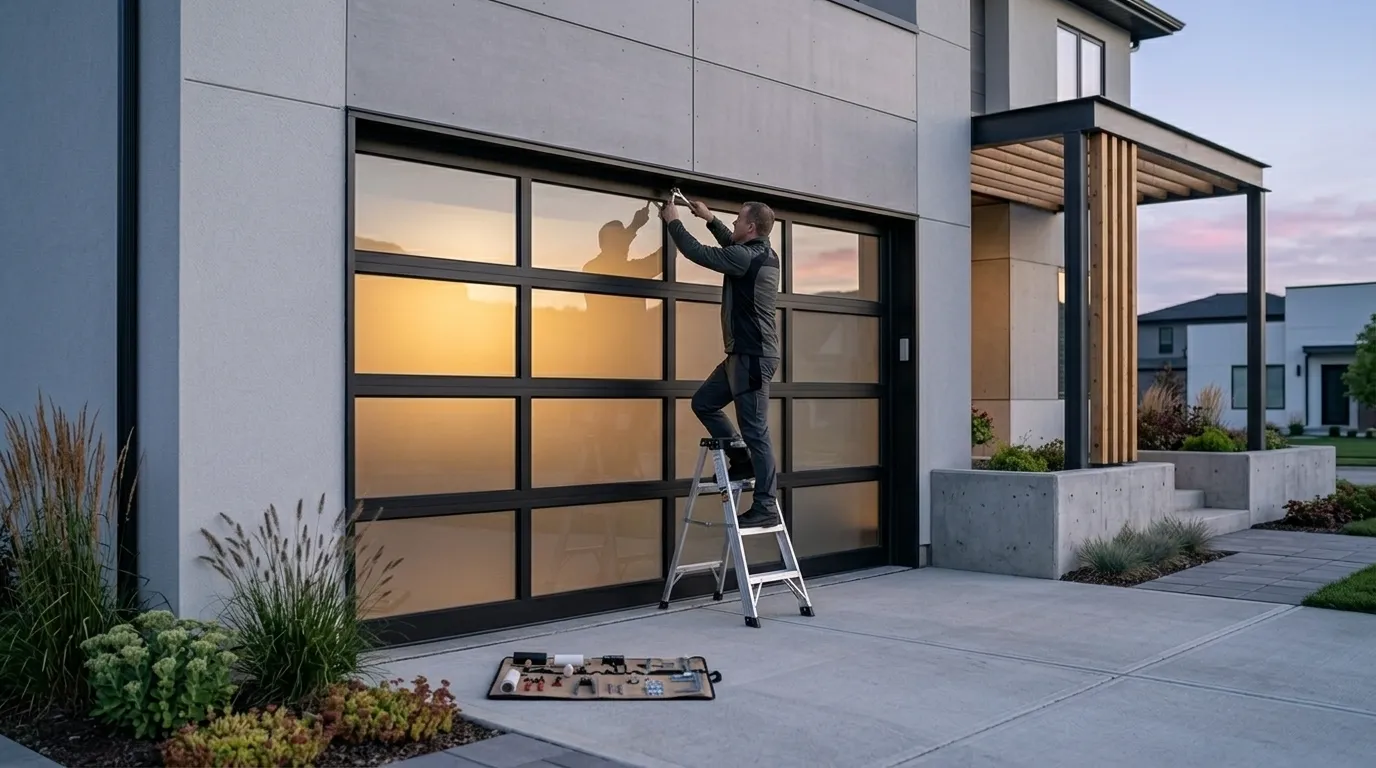
A proper installation isn't just hanging a new door on old track. In Freehold, where most houses were built between 1938 and 2005 with a median year around 1966, the rough opening rarely matches a modern door's stock sizing. We measure the jamb, header, and floor pitch first, because a lot of these openings settled decades ago and aren't square anymore. Then we size the door, track radius, and spring system to that actual opening rather than forcing a standard kit to fit.
The track and spring specs also have to account for local winters. This area sits in a cold, severe climate band, so we spec torsion springs and weatherseal rated for that swing rather than a generic mild-climate setup. If the header framing is undersized for a heavier insulated door - which shows up often in homes from the 1960s and 70s - we say so before the door goes in, not after it's hung and sagging on day one. That's the honest limitation: we won't install a heavy insulated door on framing that can't carry it without reinforcing the header first.
Homeowners usually call us after living with a door that's clearly wrong for the house, not after a sudden break. The most common trigger across the 72 named areas in this service territory is a single-panel or early sectional door original to a house built in the 1960s or 70s - the door still opens, but it's uninsulated, the seals have hardened, and the track geometry doesn't match anything sold today.
Other calls come in when a previous repair patched a mismatched panel onto an old frame, and the imbalance shows as a door that drifts open on one side or binds halfway down. On older Freehold-area houses we also see openings that were never squared to begin with, so a straight-off-the-shelf door installer will hang it slightly crooked and blame the door instead of the frame. We check the frame square and the header depth before quoting a specific door line, because that's what actually determines whether a standard install works or whether we need a custom-width panel and adjusted track radius.
A straightforward install on a squared opening with standard track clearance goes faster than one on an older frame that needs header shims, replacement jambs, or a wider track radius to clear a low ceiling - common in houses from this area's 1960s-70s build wave. We won't give you a single number until we've seen the opening, because the two jobs aren't the same amount of work even though they end with the same door.
We also don't rush spring selection. A torsion spring sized wrong for a cold-climate insulated door will fail early, and replacing a spring on a new install is a call nobody wants to make in January. So we size springs to the actual door weight plus the seasonal swing this climate band sees, not to a generic chart. If your existing header can't take a heavier insulated panel without reinforcement, that reinforcing work adds time to the job - we'll tell you that up front rather than discover it with the door half-hung.
Two things stack up in Freehold that don't stack up everywhere. First, the housing stock: most doors going in today are replacing originals from a 1938-2005 build window with a median around 1966, which means a lot of openings, headers, and track paths were framed to specs nobody uses anymore. A generic big-box install kit assumes a modern opening, and on these houses that assumption is often wrong.
Second, the climate band here is classified cold and severe, which matters more at install time than most homeowners expect. Seals, spring tension, and panel insulation all get selected differently for a door that has to hold up through a real winter versus a mild one. A door installed with mild-climate weatherseal will crack and let cold air track into the garage within a couple of seasons - not because the door was bad, but because it was speced for the wrong place. Put an aging opening from the 1960s-70s stock together with a severe cold climate and you get the two failure modes we see most: doors that never sealed right, and doors hung on framing that was never meant to carry them.
Not always without adjustment. A lot of houses here were built between 1938 and 2005, with many from the 1960s and 70s, and those openings often don't match modern standard sizing. We measure the actual opening, jamb condition, and header depth before quoting a door line, since forcing a stock-size door onto an out-of-square opening causes problems later.
Yes, generally. This area sits in a cold, severe climate band, and torsion springs sized for mild climates tend to fail early under that kind of seasonal swing, especially on heavier insulated doors. We size spring tension to both the door weight and the local climate rating rather than a generic chart.
We check the header and jamb square before quoting anything. If the framing can't carry a heavier insulated door without reinforcement, we say so up front. We won't install a door on framing that isn't rated to hold it - that's a limitation we're upfront about rather than something that shows up as sag six months later.
Call now or request a free quote - same-day service on most repairs, upfront written pricing.
