Freehold, NJ · Garage Door Service
Freehold homes mostly date to the 1960s and 70s. Here's how to tell if your original door is worth repairing or if cold-climate wear means it's time to replace.
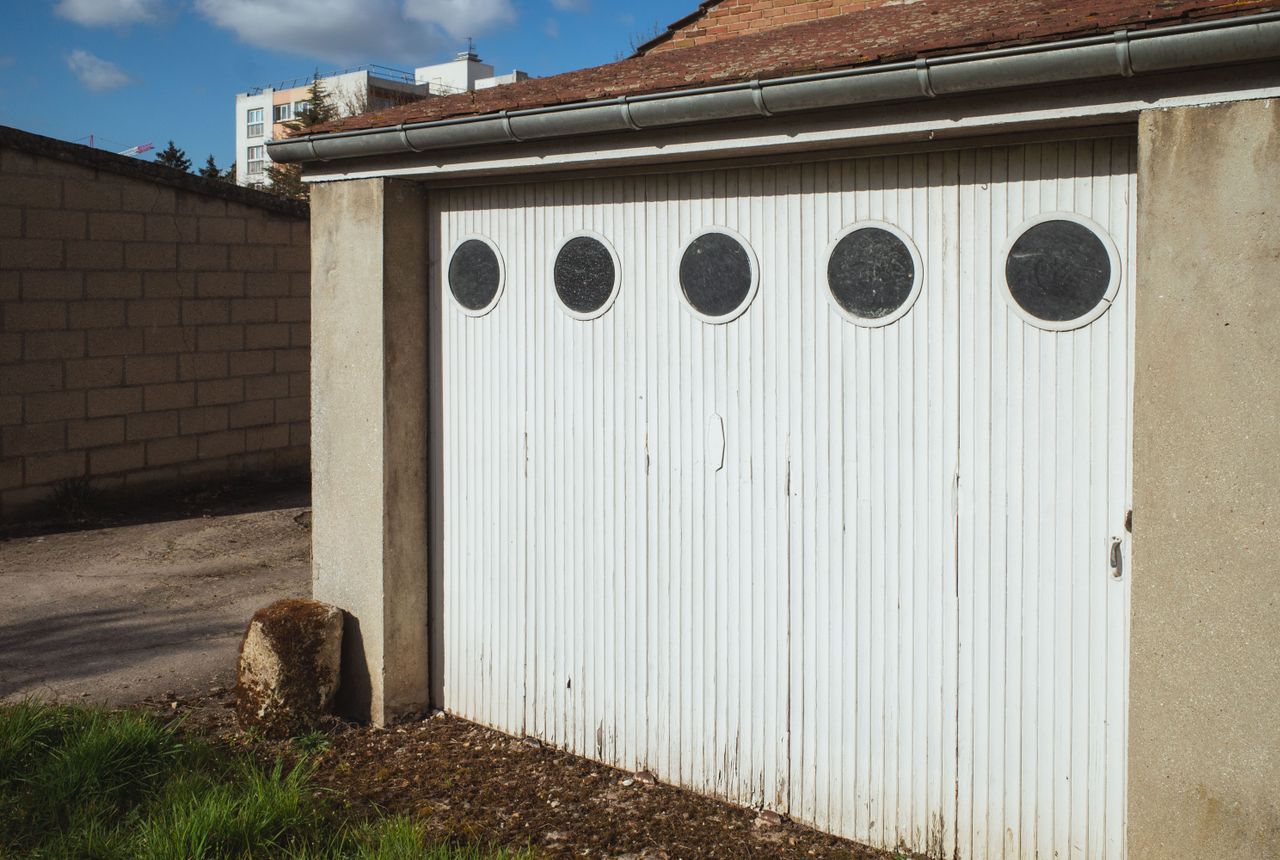
Most of the housing stock around Freehold went up between 1938 and 2005, with the bulk of it dating to the 1960s and 70s. That means a lot of doors on this side of town are original, or close to it - steel or wood panel doors on hardware nobody has manufactured in decades. When a spring snaps or a roller seizes on a door that age, the question isn't just "can this be fixed," it's "can this be fixed with parts anyone still stocks."
A torsion spring from a 1966-built garage is usually a standard size and easy to match. The track, the hinges, and especially the original opener are a different story. If the opener predates the mid-1990s safety-reversal requirements, we're not going to just swap a gear kit and call it done - that unit needs to come out regardless of what else is wrong. The door panel itself can often be saved. The drivetrain behind it usually can't be, not affordably.
This is where a lot of repair calls turn into replacement conversations, and it's not a sales pitch - it's what happens when a 55-to-85-year-old mechanism meets a New Jersey winter.
Before you call anyone, look at three things. First, the panel itself: press on it at shoulder height. If it flexes and springs back, the steel is sound. If it stays dented or you can feel rust flaking under paint, that's structural, not cosmetic, and no amount of spring or track work fixes it.
Second, check the bottom corners and the weather seal. Homes built in the 1960s-70s wave around Freehold often have doors set into openings that have settled slightly over sixty-some years, so gaps at the corners are common - but a gap wide enough to see daylight through in January is a heat problem as much as a door problem, given how cold this climate runs.
Third, pull the manual release and lift the door by hand with the opener disconnected. It should move with one hand and stay wherever you leave it, roughly balanced. If it crashes down or won't budge, the springs are doing more work than they should, and that's a wear pattern, not a random failure. None of this tells you exactly what's wrong, but it tells you whether you're calling about a repair or a replacement before the truck even shows up.
The biggest mistake we see is treating every noise or slow reaction as a spring problem, when on doors this old it's frequently the track alignment or the opener's aging drive gear giving out first. People replace a spring, the door still binds, and now they've paid twice.
The second mistake is assuming an original 1960s or 70s door is worth saving just because the panel looks fine. Steel doors from that era generally have thin, single-layer construction with little to no insulation - fine for the climate expectations of 1968, not so fine now. If you're already paying labor to replace a broken spring or a warped track on a door with no insulation value, you're often better putting that money toward a door built for the cold instead of extending the life of one that was never built for it.
The third is waiting too long. A door that's binding or sagging for months puts extra strain on the opener motor, and once that goes on a unit old enough to have no safety-reversal sensors, it needs full replacement anyway - no repair path exists for that.
Freehold sits in a cold-climate band with real winter severity, not the mild coastal tempering some shore towns nearby get. That matters for door decisions in a specific way: uninsulated steel panels common on 1960s and 70s builds contract and expand more here than they would in a milder zone, and that cycling is what eventually cracks old seals and loosens hardware that was tight for decades.
Cold also thickens grease and hardens rubber. A roller or hinge that was merely noisy in October can bind hard in a January cold snap, and on original hardware that's often the failure point - not the spring, the roller. If your door is original to a home built anywhere near that 1966 median, the hardware has already been through fifty-plus winters of that cycle.
One honest limitation: we don't carry replacement parts for every discontinued opener model from that era, and on some of the oldest units, sourcing a matching gear kit isn't worth the wait or the cost compared to a new opener. When that's the case, we'll tell you straight rather than order a part that takes weeks to arrive for a door that needs to work now.
Depends what's actually broken. A spring or roller on an original 1960s door is usually a simple fix. If the opener predates mid-1990s safety standards, or the panel has no insulation and is rusting, repair costs start competing with replacement costs fast - especially given how cold it gets here.
Cold thickens lubricant and stiffens rubber seals and rollers, so hardware that was merely slow in fall can bind in a real cold stretch. On original hardware from a 1960s or 70s build, that cycle has repeated for decades and often shows up as the failure point.
If the panel is sound and the track is straight, replace the spring alone. If the panel is thin, uninsulated steel typical of the 1960s-70s stock here and already needs other repairs, putting that labor cost toward a new insulated door usually makes more sense long term.
Call now or request a free quote - same-day service on most repairs, upfront written pricing.
