Freehold, NJ · Garage Door Service
Freehold's housing stock runs 1938 to 2005, mostly wide two-car doors on older track hardware. Here's how wind and cold work against that combination, and what to check.
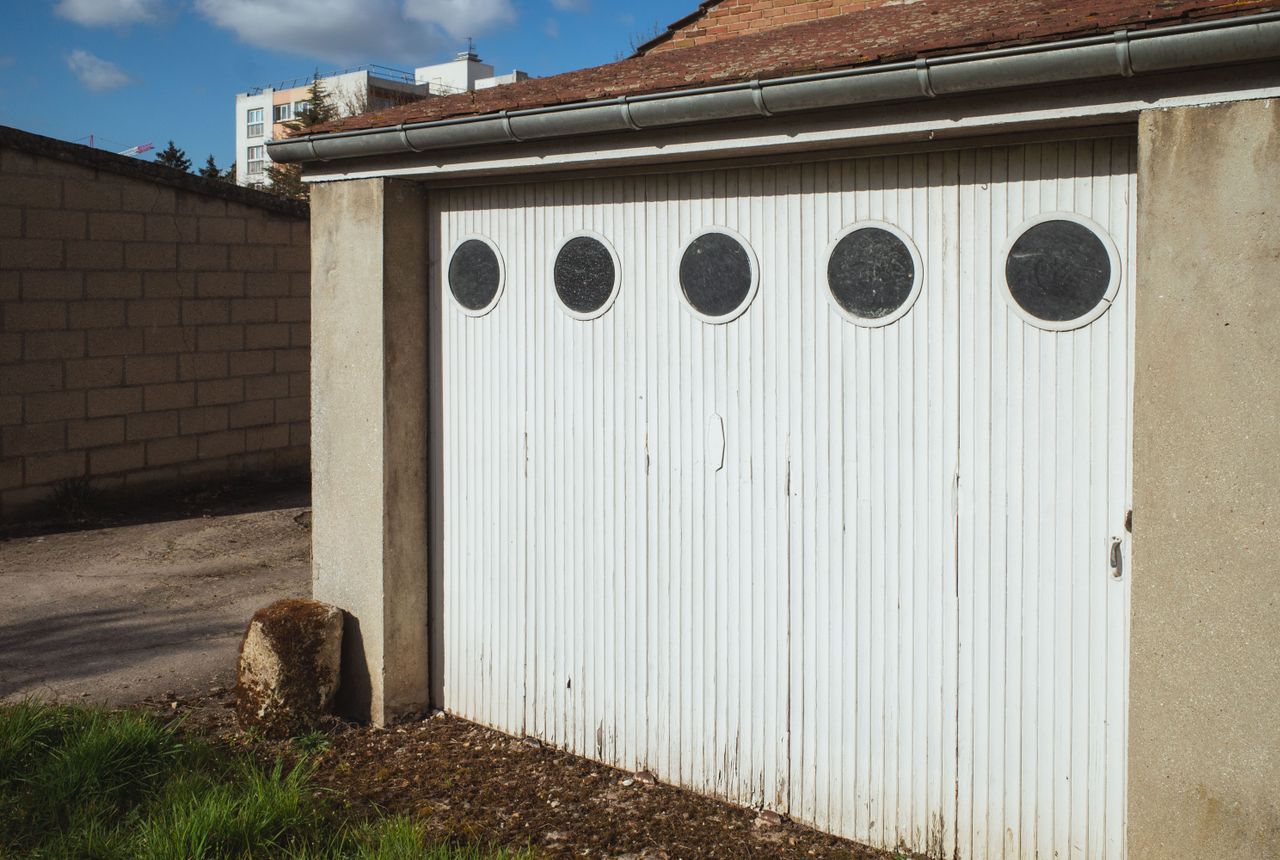
Freehold's houses were mostly built between 1938 and 2005, with the median landing around 1966. That means a lot of two-car garages with a single wide door - 16 feet across is common for that era - rather than two single doors. A wide door has more surface area for wind to push against, and more distance for the horizontal track to flex before something gives. On a single 8- or 9-foot door, a gust bows the panel a little and the track holds it. On a 16-foot door built to 1960s or 70s spec, the same gust puts real load on the center stile and on the two vertical tracks trying to hold a much longer edge straight. Add a COLD severe climate band, where steel hardware picks up brittleness in low temperatures, and you get a door that's more likely to pop a roller out of the track or crack a stile exactly on the days wind and cold show up together. This isn't a one-town-only issue, but the mix of older wide doors and cold-severe winters is what makes it a live one here.
Stand inside the garage with the door down and look at the horizontal track sections, roughly at the top of the door. On a 16-foot door, sight down the track from one end - any bow toward the inside of the garage, even a quarter inch, means the track has already taken a hit from wind load and is stretching its bracket screws. Next, check the center stile where two panels meet in the middle of the door - that's the point built to take the most flex on a wide door, and hairline cracks there start at the bottom edge, not the top, so get down and look up. Last, run a hand along the bottom weatherstrip on a cold morning. If it's stiff enough to crack when you bend it, the rubber is past its useful life for a COLD severe climate and won't seal against blown snow or wind-driven rain, which just adds moisture load to hardware that's already working harder than it should.
The usual mistake is treating a bowed track or a stiff roller as a lubrication problem. WD-40 on a roller that's binding because the track bracket has pulled loose from wind flex doesn't fix anything - it just quiets the noise for a week. The other mistake is assuming a door built in the 1960s or 70s, when a lot of this area's housing went up, was ever engineered for the wind loads we now expect of a wide door. It wasn't. Doors from that period were built to a lighter standard, on hardware sized for a lighter door. Reinforcing a track or adding a strut to an original door from that era sometimes helps, but on a door pushing 50-plus years old with a cracked stile, you're usually better off replacing the door than repairing it - the labor to retrofit bracing into an undersized frame can run close to the cost of a new door section, and it won't out-loud the wind problem it started with.
Freehold and the surrounding towns we work in - East Freehold, Yorketown, Englishtown, Colts Neck, and the rest out to Farmingdale and Vista Center - sit in the same COLD severe band and share the same housing-era mix, mostly 1960s and 70s construction across the 72 named areas nearby. That combination means the wide-door-and-wind issue isn't limited to one street or one subdivision; it shows up wherever a two-car garage from that build period still has its original door and track. Cold makes it worse in a specific way: steel contracts, lubricant thickens, and a roller that was already fighting a slightly bowed track has less give in freezing weather than it would in July. We don't stock every part for every 1960s-era track system - some of that hardware isn't made anymore - so on older wide doors, the first question we ask isn't what's broken, it's whether the track and stile are worth reinforcing at all.
If your door is a 16-foot double from the 1960s or 70s, which is common in this area, the track and center stile weren't built for today's expectations on wide doors. Wind load bows the track slightly over time, and once it's bowed, every gust after that shakes the door harder because the rollers aren't running straight anymore.
You can tighten the bracket screws holding it to the framing, and that sometimes helps for a season. But if the track itself is bent rather than just loose, straightening it without the right tools usually makes it worse. At that point it's a track replacement, not an adjustment.
Yes. In a cold-severe climate like this one, steel hardware gets more brittle at low temperatures, and lubricant thickens, so a track or roller that's already under stress from wind has less flex to absorb it. That's why cracked stiles and popped rollers show up more in winter than summer.
Depends what's wrong. A loose bracket or worn weatherstrip is a cheap fix on any door. But if the center stile has a crack or the track is visibly bent, a door built in the 1960s or 70s often isn't worth reinforcing - the hardware for that generation is getting hard to source, and a new door usually costs less than a proper retrofit.
Call now or request a free quote - same-day service on most repairs, upfront written pricing.
