Freehold, NJ · Garage Door Service
Garage door repair and replacement for Belmar, NJ homes built mostly before 1959. Freehold Garage Door Pros travels the 14 miles to fix what this area's older doors actually break.
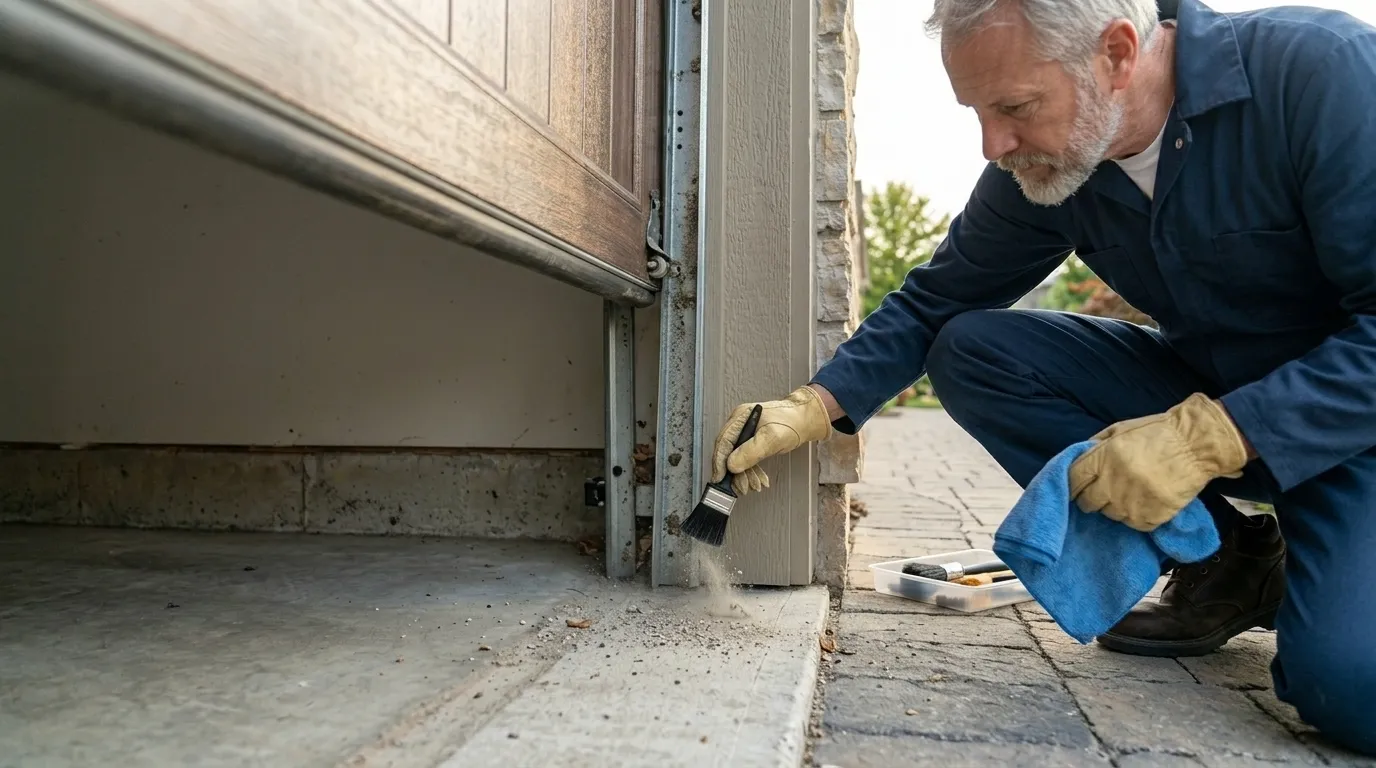
Belmar's housing stock runs older than most of the towns we cover out of Freehold. The median build year here is 1959, a full seven years ahead of the 1966 median across the wider service area, and that gap shows up the moment you open a garage door panel. A lot of these houses went up with single-car bays and jambs built for hardware that nobody sells new any more. Later additions and garages tacked on in the 70s and 80s sit next to originals from the Eisenhower years, so two houses on the same block can need completely different parts.
We don't pretend to know every block in Belmar. What we do know is that when a house was built tells us more about the door than the size of the opening does. An original bay from 1959 usually has a narrower track, older lag-bolted jamb brackets, and wiring (if any) that predates a standard opener circuit. That's the starting point for any call here, before we even ask what's broken.
About 2,791 households make up Belmar, and the median income here is $92,859 - noticeably below the $123,661 median across the full 139,755-household service area. That gap matters for how we talk about repair versus replacement. A lot of these garages were never built to hold a heavy insulated steel door or a modern belt-drive opener; the original single-layer doors were lighter, and the springs and tracks were sized for that lighter weight.
When a homeowner here swaps in a heavier replacement door without upgrading the spring and track set, the new door works the opener and hardware harder than the house was built for. We see it as premature roller wear and openers straining on lift, not because the opener is bad but because the rest of the system is still 1959-era. Matching new hardware to an old opening, rather than just buying whatever's on sale, tends to save more money over five years than the sticker price would suggest.
We run out of Freehold, and Belmar sits about 14 miles out - farther than most of the towns we cover day to day. We're not going to tell you we have a truck sitting nearby or a standing presence in town, because we don't. What we can tell you is that the trip is a known quantity, not a guess, and we plan the route the same way for every call here.
One honest limit: if a job needs a part we don't carry on the truck - an odd-length torsion spring for an older narrow bay, say - it may mean a second visit rather than a same-day fix. Older openings like the ones common in this area sometimes take non-stock sizes that a big-box door simply doesn't match. We'd rather tell you that up front than promise a one-trip job and miss it.
The service area sits in a cold-severe climate band, and that affects torsion springs and steel panels regardless of the town, but it hits older openings harder. A spring wound and set in a garage built in 1959 has had six decades of freeze-thaw cycling on the same anchor bolts and jamb wood. Add a winter cold snap and a spring that was already fatigued is the one that snaps on a Tuesday morning, not the newer one.
On a Belmar call, we expect to find original jamb hardware, single-layer panels with no insulation, and openers that were retrofitted onto a door never designed to carry one. None of that is a problem by itself - plenty of these doors run fine for years with the right maintenance - but it changes what we bring on the truck and what we look at first. We size springs to the door in front of us, not to a standard chart, because a standard chart assumes a newer build than most of what's actually out there.
No. We're based in Freehold and drive out to Belmar, about 14 miles each way. There's no local depot here, so scheduling is built around the drive rather than a same-town response.
Belmar's housing median dates to 1959, older than much of the wider area. Original openings were often built for lighter single-layer doors and lighter springs, so hardware and lift capacity here often differ from a house built in the 1970s or later.
Depends on the opening. If the jamb and track are original from the late 1950s and already worn, a repair can just delay the next failure. We look at the actual hardware condition on site rather than assuming age alone means replace.
The service area sits in a cold-severe climate band, and older torsion springs that have already cycled through decades of freeze-thaw are the ones most likely to fail on a cold morning. Age and climate compound each other here.
Call now or request a free quote - same-day service on most repairs, upfront written pricing.
