Freehold, NJ · Garage Door Service
Serving Madison Park's 1960s-era homes 13 miles east of Freehold, we fix the torsion springs and steel doors that match this area's early-1960s housing stock.
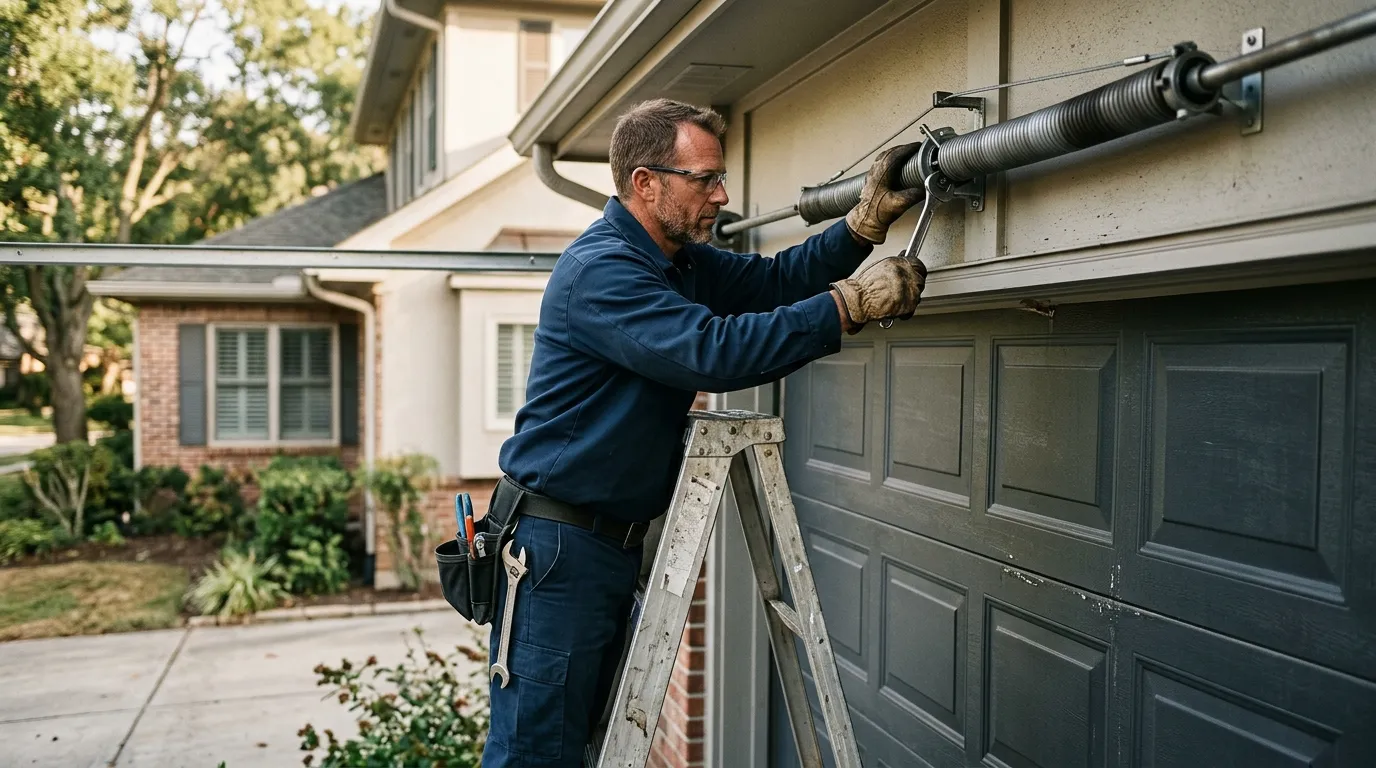
Madison Park sits about 13 miles east of our Freehold shop, out past Oakhurst and Fairview. It's a smaller pocket than some of the areas we cover, with roughly 2,849 households, and the housing here clusters tighter around one building period than the wider county does. That matters more than it sounds like it should. A garage door isn't just hardware bolted to a wall - it's sized, hung, and wired to match whatever the builder was doing the year the house went up. When a whole street went up in the same two or three years, you get the same door problems showing up on the same street, over and over, decades later. That's the pattern we see out here.
The county-wide housing stock runs from 1938 clear through 2005, a huge spread that includes plenty of newer construction with modern openers and steel-reinforced doors. Madison Park doesn't track that spread evenly. It leans older, and leans consistent. So instead of guessing at what's behind a given garage door, we come out already expecting a narrower set of setups - which saves time on a job and means fewer surprises once the door's open on the truck ramp.
The median build year in Madison Park is 1962, a few years ahead of the broader county median of 1966. That gap is small on paper but it shows up in the garage. Early 1960s construction commonly used lighter gauge steel doors, single-thickness panels without foam insulation, and torsion springs sized for those lighter doors - not the heavier insulated doors a lot of owners install today when they upgrade.
What we run into here: original torsion setups holding replacement doors they were never sized for, galvanized track that's pitted after 60-plus years outdoors, and center-mount openers on doors that have since been retrofitted with sectional panels. None of that is unusual for a house this age, but it does mean the spring calculation and the hardware check matter more than they would on a newer build. A door that closes fine can still be running on a spring rated for ten pounds less door than it's carrying.
Median household income in the area is $76,396, notably below the wider service area's $123,661. We mention it because it changes the calculus on repair versus replace - a lot of these doors are worth fixing well past the point where a newer-build homeowner might just swap the whole unit.
We're honest about this: Madison Park is 13 miles from our shop in Freehold, further out than most of what we cover day to day. We don't keep a truck stationed here and we don't advertise a fixed response window for this area - we travel out from Freehold same as we would to any of the towns on the far side of our coverage. If you need us on a weekend or after hours, call and we'll tell you straight where we are in the schedule rather than promise a number we can't back up.
The climate here is the same cold-severe band as the rest of our service area, which is worth knowing regardless of distance. Cold snaps stiffen steel, thicken old grease in the roller channels, and make a marginal spring finally let go - it's a seasonal pattern, not a Madison Park thing specifically, but it hits houses with 1960s-era hardware harder because that hardware has had 60 winters to wear down instead of 10.
Put the pieces together and Madison Park calls tend to look a certain way: a torsion spring failing on a door heavier than the original hardware was built for, track that's shifted slightly out of plumb on a house that's settled for six decades, or an opener retrofit that never got matched properly to the door's actual weight. None of these are exotic repairs. They're just repairs that go faster when you already know what era of house you're walking into.
What we won't do is tell you a door needs replacing when a spring swap and a track adjustment will get another decade out of it - and we won't tell you a repair is quick if the drum, cable, and spring all need doing at once, because on an older door they often do. Given the age of a lot of this housing stock, we check the whole system while we're there rather than just the part that failed, since one worn part at this age is rarely traveling alone.
No - we work out of Freehold and travel to Madison Park, about 13 miles east. We don't keep a truck or depot in the area, so we can't promise a fixed same-day window, but we do take calls from Madison Park regularly as part of our coverage area.
On a lot of Madison Park homes built around 1962, the original torsion spring was sized for a lighter, uninsulated door. If the door's since been swapped for a heavier insulated panel, the old spring has been overworking for years - breakage without warning is common in that setup.
Depends on the door and the damage. Given this area's older housing stock and the median income here, we lean toward repair when the frame and track are sound - a spring, cable, or roller job costs a fraction of a full replacement and can add years to a door that's structurally fine.
Yes. The whole service area sits in a cold-severe climate band, and older hardware feels it more. Stiff grease, contracted metal, and a spring already near the end of its cycle life are a common combination on the first hard freeze of the season.
Call now or request a free quote - same-day service on most repairs, upfront written pricing.
