Freehold, NJ · Garage Door Service
Princeton Junction homes mostly date to the late 1970s, later than most of the Freehold service area. See how that build era shapes the door and opener work we do here.
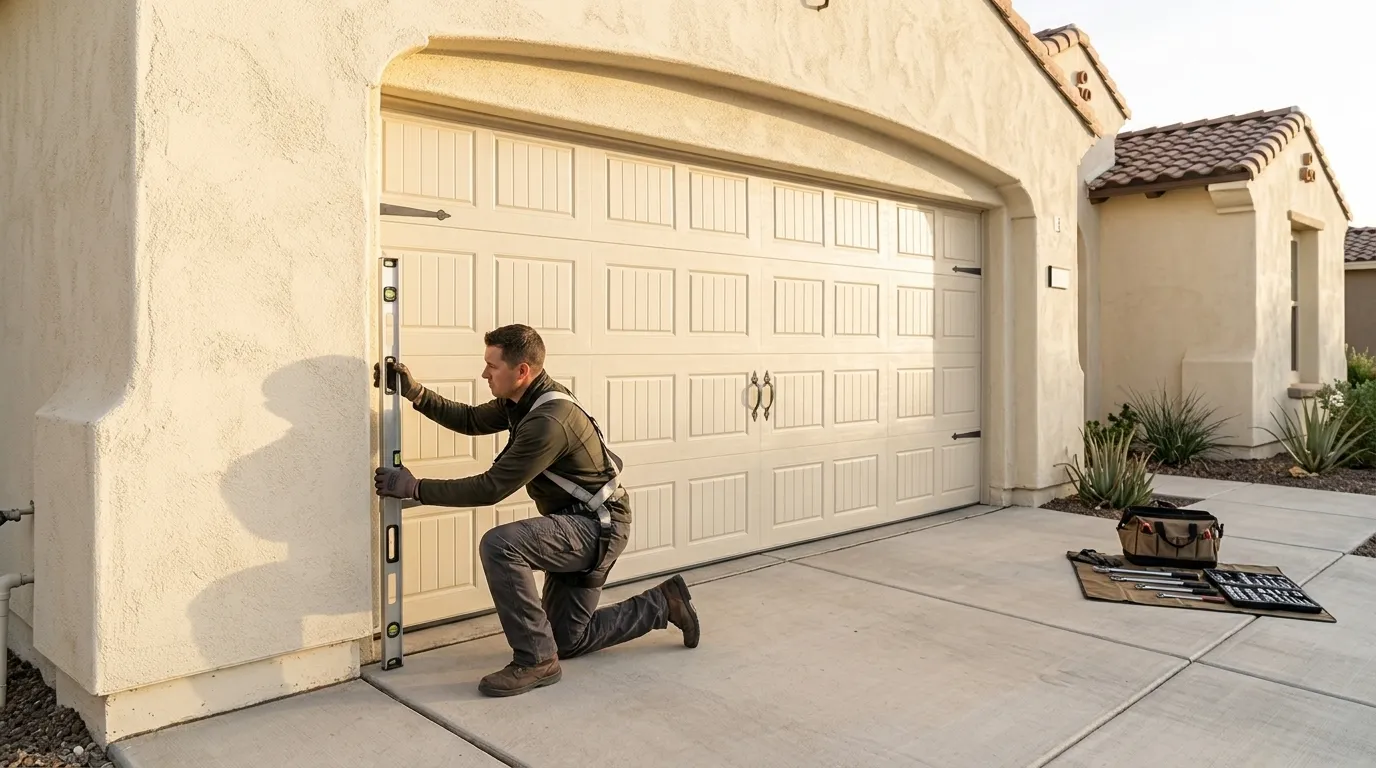
Princeton Junction sits about 19 miles from our shop in Freehold, further out than most of the towns we cover day to day. That distance matters less for the work itself than for how you should plan a service call - we're not parked around the corner, so a same-day emergency here needs a call placed early rather than late.
What sets this area apart isn't its distance so much as its age. Across the wider Freehold service area, the median home was built in 1966, with stock running from 1938 up through 2005 and a heavy concentration of 1960s and 70s construction spread over more than seventy named sections. Princeton Junction's own median build year lands at 1977 - over a decade newer than the region-wide midpoint. That's not a huge gap on paper, but it's enough to change what's actually bolted to the header above your garage.
With only 784 households in this specific pocket, it's a small, fairly uniform build era rather than a patchwork of decades like you find closer to the center of the service area. Most of the driveways here were poured within a tight ten-year window, which means most of the doors were installed within that same window too - and are now aging out together.
A house built in 1977 was framed for garage doors and openers that look nothing like what's sold today. You're more likely to find a steel-panel door on extension springs mounted along the horizontal track, rather than the older one-piece wood slab on side-mounted torsion hardware that shows up in sections of the service area built before 1960. Extension spring setups have their own failure points - the safety cables that keep a broken spring from whipping loose, the pulley brackets that rust and seize, and openers original to that era with drive systems long out of production.
Household income in Princeton Junction runs notably higher than the broader area - $219,375 versus $123,661 across the full service area covered from Freehold. That doesn't change how a torsion spring breaks, but it does mean more owners here are replacing doors and openers outright rather than nursing older hardware along, since the cost difference matters less relative to household budget.
With a small household count concentrated in one build era, the failures we'd expect to see cluster tightly too: aging extension springs, tired chain-drive openers from the late 70s and 80s, and steel panels showing rust at the bottom section where four decades of ground moisture have done their work.
We work out of Freehold, and Princeton Junction is one of the farther points in our coverage - call it a 19-mile run each way. That's worth saying plainly: we don't keep a truck stationed here, and if you need a door back on track quickly, the run time is part of the equation. We're not going to promise a response window we can't back up.
What we can tell you is that we do cover this area as part of our regular routing from Freehold, and jobs here get scheduled the same way as anywhere else in our territory - first available slot, prioritized if a door is stuck open or a spring has let go and the door won't move at all.
If you're weighing whether to call now or wait, the honest answer is that a broken torsion or extension spring on a double door isn't something to leave sitting, especially with a vehicle trapped inside. Anything else - a noisy opener, a slow-closing door, a dented panel - can usually wait for a scheduled visit rather than an emergency one.
Because Princeton Junction's housing stock is newer than the region-wide median, you're less likely to be dealing with the truly obsolete parts - the wood jamb brackets and long-discontinued opener chassis - that show up in the oldest pockets of the service area. What you are likely dealing with is hardware that's now pushing 45 to 50 years old and was never top-tier to begin with: standard-duty extension springs, single-capacitor motor openers, and steel doors with a single layer of insulation, if any.
Our climate here runs cold and hits winters hard enough that cold-stiffened lubricant and frost-tightened tracks are a normal seasonal complaint, not an outlier. A door that closes fine in September and drags or reverses on its own in January is telling you something about wear that's been building for years, not a new problem the cold invented.
One limitation worth stating plainly: we don't stock every obsolete part for openers from this era, and some models require a special order that adds a few days to the job. If your opener is original to the house, expect us to talk replacement options rather than promise an exact-match part on the spot.
Mostly in age. Homes here run newer on average - median build year around 1977 versus 1966 across the wider area - so you're more likely to have a steel door on extension springs than the older wood-slab, torsion-hardware setups found in sections built before 1960.
About 19 miles from Freehold, one of the farther points in our coverage. We don't keep a truck stationed here, so for anything urgent - a spring gone or a door stuck open - call as early in the day as you can.
Not always on the truck. Openers original to homes from that era sometimes need a special-order part, which can add a few days. If yours is original to the house, we'll usually walk through replacement options alongside repair.
Yes. Our climate band is classed as severe cold, and that means stiffened lubricant, contracted metal tracks, and springs that feel tighter in January than they do in July. A door that struggles only in winter is often showing wear that's been building for a while, not a new fault.
Call now or request a free quote - same-day service on most repairs, upfront written pricing.
