Freehold, NJ · Garage Door Service
Roosevelt's homes date mostly to 1938, decades older than the county norm. We travel 11 miles from Freehold to work on the original hardware still found on these doors.
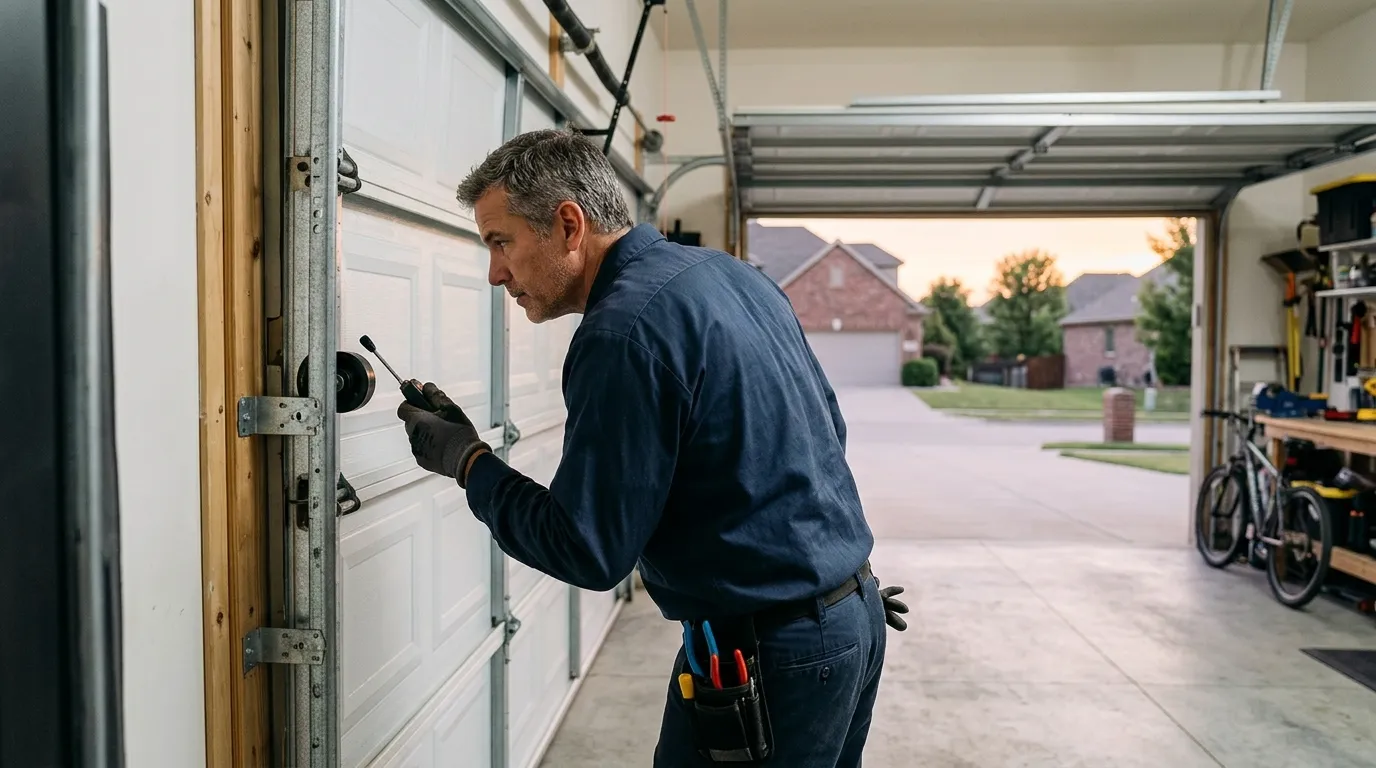
Roosevelt isn't like most of the towns we cover. The median year built here is 1938, which puts it decades ahead of the broader service area, where most stock dates to the 1960s and 70s. That gap matters more than it sounds like it should. A door built for a 1938 house was never designed around the torsion spring setups that became standard later, and a lot of original garages here were converted, extended, or refit multiple times as the town grew around its early layout. With only 361 households in Roosevelt, this isn't a place with rows of identical builder-grade doors installed in one decade. Every job tends to be its own small puzzle - a track that was rehung at some point, a jamb that's been shimmed, a header that was never sized for a modern steel door. We don't pretend Roosevelt is a repeat of the newer subdivisions closer to Freehold, because it isn't.
When a house was built here in 1938, the garage - if it had one at the start - was almost certainly a single-car structure with wood framing and a swing-out or simple track door, not the sectional steel doors most people picture today. Over the decades, plenty of those openings got widened, converted to sectional doors, or had openers bolted onto framing that was never engineered for the load. That's a different problem than what you find on a house built in 1975, where the opening, the header, and the track spacing all came from the same manufacturer spec sheet. In Roosevelt, we're often working with a garage that's had three or four different doors hung in the same rough opening over eighty-plus years, each one a slightly different fit. Median household income in this area runs $112,614, which is on the higher side for the region, and it shows in how many owners choose full replacement over patching an opening that's fundamentally out of spec - once you're rebuilding the jamb anyway, a new door usually makes more sense than fitting new hardware to old wood.
We're based out of Freehold, and Roosevelt sits about 11 miles out - the longest run of the towns we regularly cover. We don't operate a depot in Roosevelt and we won't tell you we do. What that means in practice: we schedule the drive, we don't pretend to be around the corner, and jobs here get grouped with other calls in the area when we can manage it. If your spring lets go on a Tuesday morning, we're not going to claim a same-hour response we can't back up. We'll give you an honest window based on where the truck already is that day.
The service area sits in a cold, severe winter climate band, and older wood-framed openings like the ones common in Roosevelt handle that worse than newer construction does. Gaps around a decades-old jamb let cold air track straight into the garage, which stiffens up cables and springs faster and shortens the life of an opener's moving parts. If your door still runs on original or early-replacement hardware from a house this age, that's usually the first thing we check - not the opener, not the sensors, but whether the spring and cable setup was ever actually matched to the door hanging on it. One limitation worth saying plainly: if the framing itself has shifted or rotted after eighty-plus years, no amount of hardware work fixes that, and we'll tell you when a carpenter needs to go first.
If your house dates to Roosevelt's typical 1938 build era, the garage opening was likely modified or refit more than once over the decades. Hardware installed to fit an older, non-standard opening wears differently than hardware matched to a door from the factory, which is more common in newer construction nearby.
No. We're based in Freehold, about 11 miles away, and we drive out for every Roosevelt call. We schedule the trip honestly rather than promise a response time we can't guarantee from that distance.
It depends on the frame. If the jamb and header are sound, we can often fit new hardware to the existing opening. If the wood has shifted or rotted after decades of cold-weather exposure, patching the door won't fix a structural problem - that needs a carpenter before any door work makes sense.
Yes. The area sits in a cold, severe winter climate band, and older openings without modern sealing let more cold air reach the springs and cables. That stiffens the moving parts faster than in a newer, tighter-built garage, which is part of why older Roosevelt homes see more spring and cable calls.
Call now or request a free quote - same-day service on most repairs, upfront written pricing.
